

Key Takeaways
- Individual furnaces put the gas bill and the thermostat in the tenant’s hands. A central boiler keeps both with you, along with Cincinnati’s 70 degree rule for units where tenants don’t control their own heat.
- A boiler is one point of failure. When it stops, every unit is cold at once. When one furnace stops, one unit is cold.
- A boiler usually lasts longer: a well-kept one typically runs 15 to 25 years, against 15 to 20 for a furnace, and you maintain one machine instead of several.
- Converting is a building project, not a swap. Furnaces need a gas meter, gas piping, venting, and ductwork for every unit, and many older Cincinnati buildings have no ducts at all.
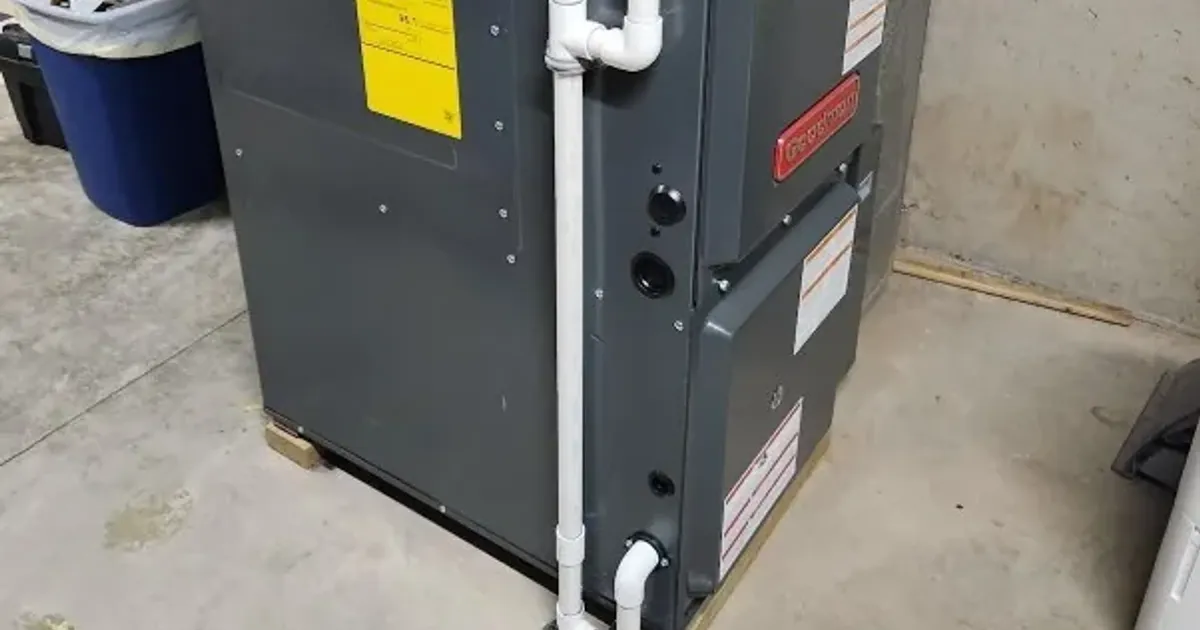
For most Cincinnati duplexes and small apartment buildings, individual furnaces are the better choice when you are building or gutting, and a central boiler is usually worth keeping when it already works. Furnaces let each tenant pay for and control their own heat, and a breakdown only affects one unit. A central boiler costs less to maintain and lasts longer, but you pay the gas, you answer to the city when any unit drops below 70 degrees, and one failure leaves the whole building cold. Here is how they compare, with a checklist at the end.
What Each Option Costs Up Front in a Cincinnati Building
Upfront cost depends far more on what the building already has than on the equipment itself. A like-for-like replacement is always the cheapest job. A change from one system to the other is always the most expensive.
Individual furnaces: you buy one furnace per unit. A furnace replacement in Cincinnati typically runs $3,000 to $10,000 installed, and a four-unit building needs four of them. Each one also needs a mechanical permit from the City of Cincinnati, its own venting, its own return air, and its own thermostat.
A central boiler: you buy one larger appliance. The price moves with its size, whether it is steam or hot water, whether the old one has to be broken up and carried out of a basement, and how much of the near-boiler piping, circulators, and controls need replacing with it. The radiators and the pipes running to them usually stay. Our post on boiler vs. furnace for Cincinnati homes covers the equipment differences in more detail.
If you own several buildings, plan these replacements years ahead rather than one emergency at a time. Our guide to budgeting for furnace replacement across multiple Cincinnati rentals walks through how to set that up.
Who Pays for the Gas
This is usually the deciding question, and the heating system mostly answers it.
Separate Meters, Tenant-Paid Heat
With a furnace and a gas meter for each unit, each tenant opens their own Duke Energy account and pays for what they burn. They set their own thermostat, so the cost of keeping it at 74 degrees with a window cracked lands on them, not you.
One Boiler, Landlord-Paid Heat
A central boiler runs on one gas meter, so the bill comes to you. You build heat into the rent and absorb a cold winter or a spike in gas prices. Tenants have no reason to turn the heat down, and the ones who overheat are paid for by the ones who don’t.
Splitting a Boiler’s Gas Bill
Heat metering for hot water systems exists. BTU meters measure the heat each unit draws, and heat cost allocators mounted on each radiator estimate each unit’s share. Both are common in Europe and uncommon here: a January 2025 HUD study of submetering describes thermal submetering as rarely used in the United States and notes that retrofitting existing buildings is hard because layouts vary so much. A BTU meter needs each unit on its own piping loop, and many older Cincinnati buildings run one loop or one steam main through every apartment. Steam systems are harder still. Before billing tenants for heat by any method, talk to your attorney. We are heating contractors, not lawyers.
Cincinnati’s Heat Rule and Who It Applies To
Cincinnati has a specific rule for units where tenants don’t control their own heat, which describes most central boiler buildings. Once the outdoor temperature stays below 60 degrees for 24 consecutive hours, the inside of those units must be 70 degrees or warmer.
The fines are $300 for the first day and $750 for each additional day. Ignoring a Board of Health order can mean up to 180 days in jail. Tenants report through 311. If the boiler is down, you can provide space heaters that keep the living space at 70 degrees or more, or temporary housing, while it gets fixed.
Units with their own furnace and thermostat are still covered by Ohio Revised Code 5321.04, which requires landlords to supply reasonable heat and keep the heating equipment they supply in good and safe working order. The difference is that the city’s 70 degree rule is written for the shared-heat setup. Check with your attorney on how either applies to your building.
One Boiler Down vs. One Furnace Down
A central boiler is a single point of failure. A failed circulator, a bad igniter, or a tripped low-water cutoff takes heat away from every unit at the same moment. Every tenant calls at once.
With individual furnaces, a failed inducer motor leaves one unit cold. You have more machines that can break, but each break is smaller.
Our view: if you keep a central boiler, the fall service visit is not optional. When it fails, the whole building is out of heat at once, and the fines start at $300 for the first day and rise to $750 for every day after. Our landlord guide for when a tenant has no heat covers what to do in the first hours.
Maintenance, Inspections, and Lifespan
One boiler means one tune-up a year. Four furnaces mean four tune-ups, four filters for someone to change, and four tenants to give 24 hours’ notice before entry. On a maintenance schedule, the boiler wins.
It usually wins on lifespan too. Furnaces typically last 15 to 20 years. A well-kept boiler typically lasts 15 to 25, and many run longer. The Pacific Northwest National Laboratory, writing for the U.S. Department of Energy’s Building America program, puts the typical life of HVAC equipment at 15 to 20 years and notes that boilers can often last for many decades. Our post on annual boiler maintenance covers what that yearly visit includes, and our boiler service handles repair and replacement.
On state inspections, building size matters. Ohio Revised Code 4104.04 exempts steam boilers at 15 psig or less and hot water boilers at 160 psig or less (and 250 degrees or less) from the state’s boiler inspection requirements when they are in private residences or in apartment houses of fewer than six family units. Exempt boilers must still have the safety devices the state board prescribes. In a duplex to five-unit building, that means nobody from the state checks the boiler, and your yearly service is the only check it gets. At six units and up, plan for the state program as well.
Space, Venting, Comfort, and Noise
Space and Venting
A boiler takes one corner of the basement and one flue. Furnaces need a spot in or near every unit, often a closet that used to hold coats, plus a vent for each. High-efficiency furnaces vent through the side wall in plastic pipe, and each termination has to meet clearance rules from windows, doors, and neighboring air intakes, which gets tight on a narrow Cincinnati lot. If the old boiler shared a chimney with a water heater, removing the boiler can leave the water heater alone on a flue sized for something much bigger, and that needs to be checked for proper draft.
Comfort and Noise
Radiators and baseboard give quiet, even heat with no blower and no dust moving through ducts. Furnaces heat a cold apartment faster, and their ducts can carry central air conditioning, which a boiler can’t. The trade is blower noise, which tenants hear more when the furnace sits in a closet off the living room.
Converting a Cincinnati Building From a Boiler to Furnaces
Going from one central boiler to a furnace in every unit is a bigger job than most owners expect.
Gas meters. Each unit needs its own meter, which means a request to Duke Energy. Duke installs and owns the meters, and its gas tariff on file with the Public Utilities Commission of Ohio covers multi-family service for duplexes, triplexes, and small buildings.
Gas piping. Everything after the meters belongs to you: a new line from each meter to each furnace, sized for its load. Our gas line repair and replacement service handles that part.
Ductwork. Many older buildings in Clifton, Northside, and Walnut Hills were built with steam or hot water heat and never had ducts. Running ducts through plaster walls is often the largest part of the cost.
Permits and the old boiler. Each furnace needs a city mechanical permit. The boiler and its piping come out, and the radiators either come out too or stay as decoration.
Going the other way, from furnaces to one boiler, is rare in small buildings. It means running new heating pipe to every unit and giving up the separate meters. An in-between step is to keep the boiler and split it into zones, one per unit, each with its own thermostat. That gives tenants control of their temperature, though the gas bill and the single point of failure stay with you.
A Decision Checklist for Cincinnati Building Owners
Run your building through these questions. The more you answer yes, the stronger the case for individual furnaces.
Do you want tenants paying their own heat? Then you need a meter and a heating system per unit.
Is the boiler near or past 25 years, or leaking from its sections? Then you are replacing something either way, and conversion is worth pricing.
Does the building already have ducts, or are you gutting the walls anyway? Then the hardest part of a conversion is already paid for.
Do you want central air conditioning? Ducts for furnaces carry it. A boiler doesn’t.
Is there room for a furnace and a vent at every unit? If not, keep the boiler.
Is the boiler sound, the radiators working, and heat already built into your rents? Then keep it, service it every fall, and consider zoning it by unit.
When You Don’t Need a Contractor
You don’t need us to make this decision if the boiler works and you are happy paying the gas. Keep it, book the yearly service, and move on. You also don’t need a technician when one tenant reports a single cold radiator in a hot water system. Bleeding the air out with a radiator key takes a few minutes and often fixes it.
And if the real question is whether you can legally bill tenants for heat, or how a conversion affects your taxes and depreciation, that is for your attorney and your accountant, not a heating company. Call us once you know what you want, and we will price the equipment side.
Heating for Multi-Unit Buildings in Cincinnati
Degree of Comfort services duplexes, small apartment buildings, and rental homes across Cincinnati and the surrounding Tri-State, including Northern Kentucky and Southeast Indiana. We repair and replace boilers and furnaces, run the gas piping between them and the meters, and can walk your building to tell you what a conversion would involve before you commit to one. We are family-owned, licensed and insured, with upfront, flat-rate pricing. Owners with several buildings can put every boiler and furnace on one schedule through our Comfort Club.
Call (513) 586-5107 or request an estimate for your building.
Frequently Asked Questions
Let Degree of Comfort Handle It
Our licensed technicians serve Cincinnati and surrounding areas. Same-day service available.
Call (513) 586-5107