

Key Takeaways
- Most old radiator systems are worth keeping. In many historic homes the smart move is a new boiler on the existing pipes and radiators, not a whole new system.
- Old boilers are usually oversized. They were sized for drafty houses, often for coal. Size the new one to the house, or to the radiators on a steam system, never to the old nameplate.
- Treat old pipe and boiler insulation as asbestos until tested. Leave it alone if it’s intact, and use a licensed abatement contractor if it has to come off.
- Check historic district rules before you add anything outside. New vents, condensers, and wall penetrations on a building in a Cincinnati local historic district may need a Certificate of Appropriateness.
If your historic Cincinnati home has a steam or hot water system that still heats evenly, you usually don’t need to convert it. Replace the boiler and keep the pipes and radiators. Convert when the system is failing throughout, when you want central air anyway, or when the house still runs on an old gravity furnace. Then the choice is between a new boiler on the existing radiators, a steam-to-hot-water conversion, a high-velocity small-duct system, or ductless mini-splits and heat pumps. In an 1880s to 1940s house in Over-the-Rhine, Clifton, Hyde Park, Northside, or Mount Auburn, the equipment is only part of the job. Asbestos, the chimney, and the city’s historic district rules can change the plan. Here is how to work through it.
Keep or Convert? What Older Cincinnati Homes Usually Have
Start by naming what is in the basement. Older homes in Cincinnati tend to have one of three systems, and each points to a different answer. If you’re still deciding between radiators and ducts in general, our post on boilers vs. furnaces in Cincinnati covers that comparison.
Steam
A steam boiler has a sight glass on the side and a pressure gauge that reads low, about 2 psi or less. Radiators have one or two pipes and, on one-pipe systems, a small air vent on the side. Steam is common in older homes in Clifton, Northside, and Walnut Hills. A steam system that heats evenly and doesn’t bang is often worth keeping for decades more with a new boiler.
Gravity Hot Water
Older hot water systems were built to circulate without a pump: hot water rose, cool water fell, and wide pipes made it work. Many have an open expansion tank in the attic. These systems were often converted later with a circulator pump, but the large pipes and heavy radiators remain. They hold a lot of water, and with a modern boiler and pump they can heat very evenly.
Gravity Furnace
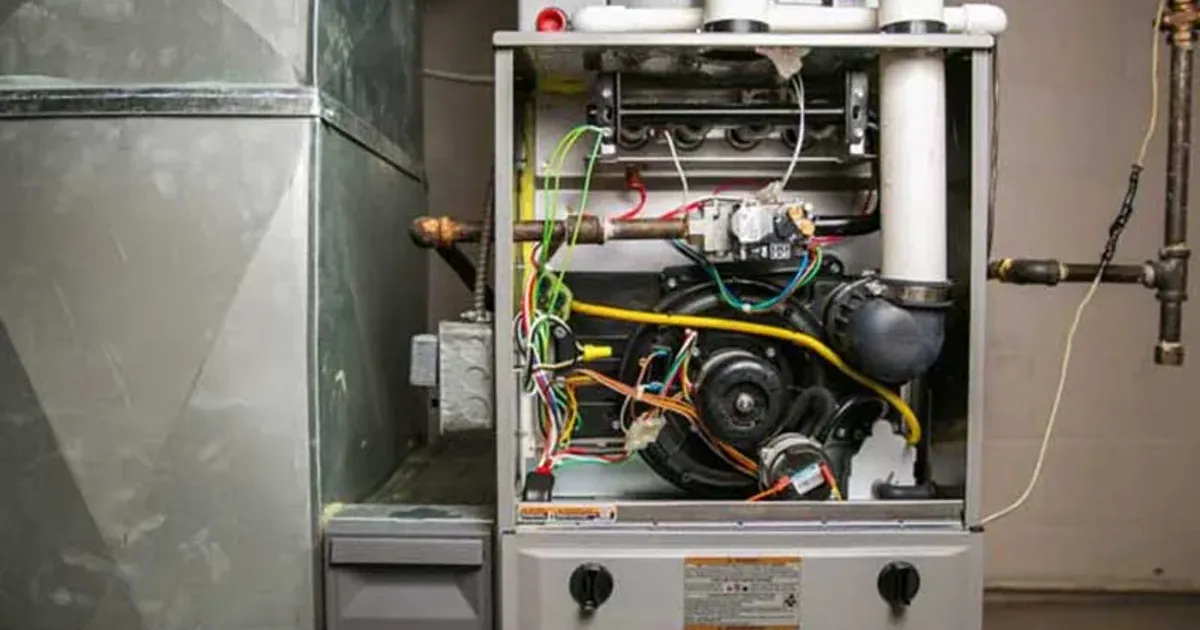
A large round furnace with big ducts spreading out from the top, sometimes called an octopus furnace, moves warm air with no blower. Many started out burning coal. This is the one system we nearly always recommend replacing. The furnace itself is long past its life, and the ducts are often wrapped in insulation that may contain asbestos.
Three Ways to Keep Your Radiators
If the radiators and piping are sound, these options keep the heat you have and change only what needs changing.
Replace the Boiler Only
A new steam boiler on a steam system, or a new hot water boiler on a hot water system. It is the least disruptive choice, with no walls opened and no radiators moved. On steam, the new boiler has to be piped the way the manufacturer specifies, and the main vents should be checked at the same time. Our boiler service page covers installation and repair.
Convert Steam to Hot Water
Converting steam to hot water lets you use a modern hot water boiler with finer temperature control, and it ends the banging and uneven steam heat some houses have. It isn’t automatic. A hot water system runs at about 12 to 15 psi, and steam at 2 psi or less. Pipes, valves, and radiators that held 2 psi for a hundred years may leak at 12, so the system has to be pressure tested first. Some steam radiators also aren’t built to pass water through them evenly, and one-pipe steam systems need new return piping. Expect a conversion to cost more than a boiler swap and to need some radiators replaced or re-piped.
Modernize a Gravity Hot Water System
A new boiler and circulator on the existing pipes, with the attic expansion tank replaced by a closed tank at the boiler. The large water volume in these systems matters when choosing the boiler, so tell your contractor what you have. Our guide to what you should know about boilers covers how modern boilers work and how long they last.
The Oversized-Boiler Problem in Cincinnati’s Older Homes
The boiler in an older home was usually sized for a house with no wall insulation, single-pane windows, and gaps everywhere. Many were sized again for coal, or replaced size-for-size from a boiler that was too big to begin with. Since then, most of these houses have had storm windows, attic insulation, or air sealing. The result is a boiler far larger than the house needs, which short-cycles, wastes fuel, and wears out sooner.
How the new one should be sized depends on the system. A hot water boiler should be sized from a heat loss calculation of the house as it is today, room by room. A steam boiler is different: it has to be sized to the total radiation connected to it, which means measuring every radiator. A contractor who reads the old boiler’s nameplate and orders the same size is skipping both steps. If some rooms run cold no matter what the boiler does, read our post on why older Cincinnati homes have uneven heat before you buy a bigger boiler.
Options When You Want Air Conditioning Too
For many Cincinnati owners, the reason to consider converting is summer, not winter. Radiators don’t cool. These are the options that add cooling without tearing a historic house apart.
High-Velocity Small-Duct Systems
These use small, flexible supply tubes that fit inside walls, closets, and between floor joists, ending in small round outlets instead of large registers. They were made for older homes, and they leave plaster and trim mostly intact. They can heat as well as cool, but many owners keep the radiators for heat and use the small-duct system for cooling only.
Ductless Mini-Splits and Heat Pumps
A ductless mini-split puts an indoor head in each room or zone, connected by a small refrigerant line to an outdoor unit. It needs only a small hole through the wall. Mini-splits are heat pumps, so they heat as well as cool, and they work well for a third floor or an addition the radiators never reached. Our mini-split service page covers installation. A ducted heat pump replacing a gravity furnace is another option if you are installing new ducts anyway. See our heat pump service for both. If the house is a rental, our guide to upgrading heating in an older Cincinnati rental ranks upgrades by payback.
Here is our view: don’t tear out a working radiator system to add full-size ductwork. According to ENERGY STAR, about 20 to 30 percent of the air moving through a typical duct system is lost to leaks, holes, and poor connections. In a house with plaster walls and balloon framing, new ducts are hard to seal well and often end up in an unconditioned attic. Keep the radiators for heat and add cooling with small ducts or mini-splits.
Asbestos on Old Pipes and Boilers
The white or gray wrap on old heating pipes, boilers, and gravity furnace ducts may contain asbestos. The EPA lists insulation on hot water and steam pipes among the places asbestos is found in older homes, and says material that is in good condition and left undisturbed is not likely to be a health risk. The risk comes when it is cut, sanded, or torn off, which is exactly what a boiler replacement can do.
Before any work, have a sample tested if the insulation looks original. If it is damaged or has to be removed, that work belongs to a licensed asbestos abatement contractor, not a heating contractor. In Ohio, asbestos abatement contractors are licensed by the Ohio EPA, which took over the program from the Ohio Department of Health in 2018. Ask for the contractor’s license number and confirm it with the Ohio EPA asbestos program. Schedule abatement before the heating work, so the boiler crew walks into a clean basement.
Historic District Rules in Cincinnati: Vents, Condensers, and Wall Penetrations
Inside the house, a heating change is a matter of permits. Outside, it can also be a matter of historic review. The City of Cincinnati says a Certificate of Appropriateness is needed for work on local landmarks and on properties in local historic districts, and that the review generally covers exterior work. Minor changes can often be approved by the Urban Conservator. Larger ones go to the Historic Conservation Board.
For a heating project, that means a new sidewall vent from a high-efficiency boiler, an outdoor condenser or mini-split unit, a line set running up a wall, or a new hole through brick may need approval if the building is in a local historic district. Placement matters, and equipment out of sight from the street is generally easier to approve. Being listed on the National Register is not the same as being in a local historic district, so check which applies to your address. We are heating contractors, not lawyers or preservation staff, so confirm with the city’s Historic Conservation Office before you commit to a location or sign for equipment.
Chimneys and Venting
Most old boilers vent into a masonry chimney. When a large old boiler comes out, the chimney may be oversized for the new equipment, and an unlined or deteriorated flue may need a liner before a new atmospheric boiler can safely use it. If the water heater shares the chimney, it has to be accounted for too. A condensing boiler avoids the chimney entirely, venting through plastic pipe out a sidewall or the roof, which brings you back to the historic review question above. Ask your contractor which venting route they plan and why, before the quote is final.
Preserving the Radiators
Cast iron radiators last far longer than any boiler connected to them. If you are keeping them, a few things help. Keep furniture and heavy covers from boxing them in. On steam, replace failed radiator air vents and make sure one-pipe radiators pitch slightly back toward the supply valve so condensate drains. On hot water, bleed trapped air at the start of each season.
If you are removing radiators during a conversion, think before scrapping them. Original radiators matter to many buyers of historic homes, and a spare can replace one that cracks later.
When You Don’t Need a Contractor
If your steam or hot water system heats every room, the boiler is under 15 years old, and nothing leaks or bangs, you don’t need a conversion. You need an annual service visit and nothing more. Bleeding hot water radiators, checking the steam sight glass, and keeping radiators clear are jobs you can do yourself.
You also don’t need us to identify asbestos or decide what your historic district allows. Asbestos testing belongs with a licensed inspector and abatement contractor, and historic questions belong with the Historic Conservation Office. Call a heating contractor once those answers are in hand.
Heating Help for Historic Homes in Cincinnati
Degree of Comfort works on steam boilers, hot water boilers, mini-splits, and heat pumps in older homes across Cincinnati and the surrounding Tri-State, including Northern Kentucky and Southeast Indiana. We can look at your system, size a new boiler to the house or the radiators, and tell you plainly whether converting makes sense. We are family-owned, licensed and insured, with upfront, flat-rate pricing.
Call (513) 586-5107 or request an estimate for your home.
Frequently Asked Questions
Let Degree of Comfort Handle It
Our licensed technicians serve Cincinnati and surrounding areas. Same-day service available.
Call (513) 586-5107