Structural Drying in Cincinnati and Northern Kentucky
Local Structural Drying Pros Who Know Cincinnati and Northern Kentucky
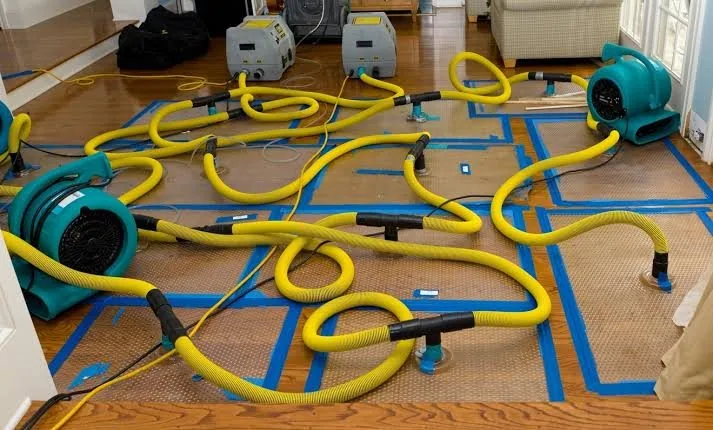
Structural drying across Cincinnati and Northern Kentucky usually means a basement or first floor where water got below the surface, into the subfloor, the bottom plates of the walls and the back of the drywall. Plenty of homes here still have hardwood and plaster, which take longer to dry than carpet and drywall, so the plan changes from house to house. Equipment stays until the meter readings match a dry spot elsewhere in the home. The drying price is set out before any equipment comes off the truck.
Emergency Structural Drying in Cincinnati and Northern Kentucky
Wet framing and subfloor don’t dry on their own in a closed-up house, and the longer they stay wet the more likely a floor cups or a wall starts to smell. Before going into a room where water reached the outlets, shut off the breaker for it. Most drying jobs start the same day we’re called, weekends included.
Drying the Structure, Not the Surface
A floor can feel dry underfoot while the subfloor beneath it is still holding water. That gap between how a room feels and what the material is actually carrying is where most water damage problems are created — the smell nobody can locate, the floor that cups three months later, the mold behind a wall that looked fine.
What Holds the Water
Water leaves the open floor quickly and stays in everything porous it reached. These are the places we meter:
- Subfloor and floor joists under carpet or hardwood
- The bottom of drywall sheets, where water wicks upward
- Wall cavities and the insulation inside them
- Framing and sill plates along exterior walls
- Concrete slab and the flooring bonded to it
- Cabinet bases, stair stringers, and trim
Drywall is the one that surprises people. Water wicks upward inside the sheet well above the line you can see on the surface.
Happy Homeowners
Why Homeowners in Cincinnati Choose Degree of Comfort
Five Paws Across the Board.
Family owned since 1993, 33 years of experience
Hear more from our customers





Water damage that needs drying? Call to get equipment in
Call NowHow the Drying Works
The equipment is the easy part. The measuring is what makes it work:
- Map the moisture: meters and, where it helps, thermal imaging show how far the water travelled. Water moves further through a wall than it does across a floor.
- Open what needs opening: a sealed wall cavity does not dry on its own. Sometimes that means small controlled openings rather than replacing the whole wall.
- Set the equipment: air movers to lift moisture out of surfaces, dehumidifiers to pull it out of the air before it settles back in.
- Read it daily: we take the same readings in the same spots each day. Drying is finished when the numbers say so, not when a set number of days have passed.
- Document and remove: you get the log of readings for your insurer, and the equipment comes out when the structure has hit normal moisture content.
When You Do Not Need Us
Clean water on a hard, sealed floor that you wiped up within an hour does not need structural drying. Nothing porous took it on, so there is nothing left to dry. Open a window and move on.
A damp patch that has been there for years, in a basement that has always been humid, is also not a drying job. That is an ongoing moisture source — groundwater, a failed gutter, poor grading — and running equipment on it just runs your meter. Find the source first, and if it is not plumbing we will tell you.
Why Choose Degree of Comfort for Structural Drying
Drying is easy to fake. Equipment sits in a room for three days, someone says it is dry, and nobody finds out otherwise until the flooring moves. The reading log is the difference, and we hand you ours.
Related Services
Drying normally follows emergency water extraction and runs alongside mold prevention and remediation. It is one stage of water damage restoration, and if the water came from a failed pipe you may also need pipe repair and replacement.
Degree of Comfort in Cincinnati

Structural Drying FAQs
Most homes run three to five days with equipment in place. What changes it is how much water there was, which materials it soaked into, how much of it we could extract first, and the humidity outside. Hardwood and plaster take longer than carpet and drywall. We read it daily and pull the equipment when the numbers hit target, not on a fixed schedule.
Household fans move air across a surface, which dries the surface and leaves the water inside the material. Restoration air movers are shaped to lift moisture out of the material itself, and they only work paired with dehumidifiers — otherwise you are moving water from the floor into the air and back into the walls. Fans alone are why a room can feel dry and still smell two months later.
Yes, continuously. Drying stops when the equipment stops, and moisture redistributes back through the material overnight if you switch it off. It is noisy, and it does add to your electricity bill for those days. Turning it off to sleep is the single most common reason a job takes twice as long.
We take moisture readings from the same points daily and compare them against a dry standard from an unaffected part of the same house, using the same material. When the affected areas reach that baseline and hold it, the structure is dry. That comparison is why a reading on its own does not tell you much.
Less often than people expect. Drywall that was wet but not contaminated can frequently be dried in place. What generally cannot be saved is carpet pad, saturated insulation, and anything that was touched by contaminated water. We would rather dry material than bill you to replace it.
Where the water event itself is covered, drying normally is too, and it is the part adjusters most expect to see documented. The daily reading log we produce is what supports that. Coverage of the underlying event is still your insurer’s decision.

Dry It Properly the First Time
The difference between a room that is dry and a room that feels dry shows up months later, in the flooring and in the smell. We measure it, log it, and show you the numbers before we pull the equipment.
Need Structural Drying? Tell us what’s going on.
(513) 586-5107Call · Mon–Sun: 8am–8pm
Step 1 of 2
Structural drying by neighborhood
We dry framing, subfloor, and drywall to measured readings across Cincinnati and Northern Kentucky — 170 neighborhoods and counting. Find yours below for local detail on your area.
View all 170 neighborhoods we serve
Cincinnati Neighborhoods
- Structural drying in Sedamsville
- Structural drying in Sayler Park
- Structural drying in Riverside
- Structural drying in East Price Hill
- Structural drying in West Price Hill
- Structural drying in Lower Price Hill
- Structural drying in Over-the-Rhine
- Structural drying in Downtown
- Structural drying in West End
- Structural drying in Mount Adams
- Structural drying in Mount Auburn
- Structural drying in Clifton
- Structural drying in Corryville
- Structural drying in Northside
- Structural drying in College Hill
- Structural drying in Walnut Hills
- Structural drying in East Walnut Hills
- Structural drying in Avondale
- Structural drying in Hyde Park
- Structural drying in Oakley
- Structural drying in Mount Lookout
- Structural drying in Columbia-Tusculum
- Structural drying in Mount Washington
- Structural drying in Madisonville
- Structural drying in Pleasant Ridge
- Structural drying in Westwood
- Structural drying in Pendleton
- Structural drying in Queensgate
- Structural drying in CUF (Clifton Heights, University Heights & Fairview)
- Structural drying in Camp Washington
- Structural drying in South Fairmount
- Structural drying in East End
- Structural drying in North Fairmount
- Structural drying in Evanston
- Structural drying in South Cumminsville
- Structural drying in English Woods
- Structural drying in North Avondale
- Structural drying in Millvale
- Structural drying in Paddock Hills
- Structural drying in Spring Grove Village
- Structural drying in Linwood
- Structural drying in Bond Hill
- Structural drying in Villages of Roll Hill
- Structural drying in East Westwood
- Structural drying in Western Hills
- Structural drying in California
- Structural drying in Carthage
- Structural drying in Winton Hills
- Structural drying in Roselawn
- Structural drying in Mount Airy
- Structural drying in Hartwell
- Structural drying in Kennedy Heights
Hamilton County, OH
- Structural drying in Norwood
- Structural drying in Blue Ash
- Structural drying in Montgomery
- Structural drying in Madeira
- Structural drying in Wyoming
- Structural drying in Mariemont
- Structural drying in Cheviot
- Structural drying in Covedale
- Structural drying in St. Bernard
- Structural drying in Elmwood Place
- Structural drying in Delhi Hills
- Structural drying in Golf Manor
- Structural drying in Fairfax
- Structural drying in Mack
- Structural drying in Monfort Heights
- Structural drying in Bridgetown
- Structural drying in Finneytown
- Structural drying in Amberley
- Structural drying in Arlington Heights
- Structural drying in North College Hill
- Structural drying in Newtown
- Structural drying in Turpin Hills
- Structural drying in Silverton
- Structural drying in Lockland
- Structural drying in Groesbeck
- Structural drying in Mount Healthy
- Structural drying in Reading
- Structural drying in Dent
- Structural drying in Deer Park
- Structural drying in Terrace Park
- Structural drying in Dry Run
- Structural drying in White Oak
- Structural drying in Forestville
- Structural drying in Cherry Grove
- Structural drying in Kenwood
- Structural drying in Lincoln Heights
- Structural drying in Dillonvale
- Structural drying in Woodlawn
- Structural drying in Addyston
- Structural drying in Greenhills
- Structural drying in Northbrook
- Structural drying in Indian Hill
- Structural drying in Evendale
- Structural drying in Glendale
- Structural drying in Sharonville
- Structural drying in Northgate
- Structural drying in Springdale
- Structural drying in Miamitown
- Structural drying in Forest Park
- Structural drying in Pleasant Run
- Structural drying in Cleves
- Structural drying in North Bend
- Structural drying in Harrison
Kenton County, KY
- Structural drying in Covington
- Structural drying in Erlanger
- Structural drying in Ludlow
- Structural drying in Park Hills
- Structural drying in Bromley
- Structural drying in Fort Wright
- Structural drying in Fort Mitchell
- Structural drying in Villa Hills
- Structural drying in Lakeside Park
- Structural drying in Crescent Springs
- Structural drying in Crestview Hills
- Structural drying in Edgewood
- Structural drying in Taylor Mill
- Structural drying in Elsmere
- Structural drying in Independence
Campbell County, KY
- Structural drying in Newport
- Structural drying in Bellevue
- Structural drying in Fort Thomas
- Structural drying in Dayton
- Structural drying in Southgate
- Structural drying in Wilder
- Structural drying in Highland Heights
- Structural drying in Cold Spring
- Structural drying in Alexandria
- Structural drying in Melbourne
Boone County, KY
Clermont County, OH
- Structural drying in Loveland
- Structural drying in Mount Carmel
- Structural drying in Summerside
- Structural drying in Withamsville
- Structural drying in Milford
- Structural drying in Mulberry
- Structural drying in Mount Repose
- Structural drying in Day Heights
- Structural drying in New Richmond
- Structural drying in Amelia
- Structural drying in Batavia
- Structural drying in Owensville
- Structural drying in Goshen
- Structural drying in Moscow
- Structural drying in Newtonsville
- Structural drying in Williamsburg
- Structural drying in Bethel