

Key Takeaways
- Only hot water radiators get bled. Steam radiators have an automatic air vent instead. If your boiler has a sight glass, you have steam, and this how-to doesn’t apply to your radiators.
- Bleeding takes a radiator key, a towel, and a cup. Turn the heat off, let it cool, open the valve until the hiss turns to water, then close it.
- Check the boiler gauge afterward. A hot water system should read about 12 to 15 psi cold. If it stays low and you have no automatic fill, call a technician.
- Bleeding fixes air, nothing else. If air keeps coming back, the pressure keeps dropping, or a radiator stays cold after bleeding, something else is wrong.
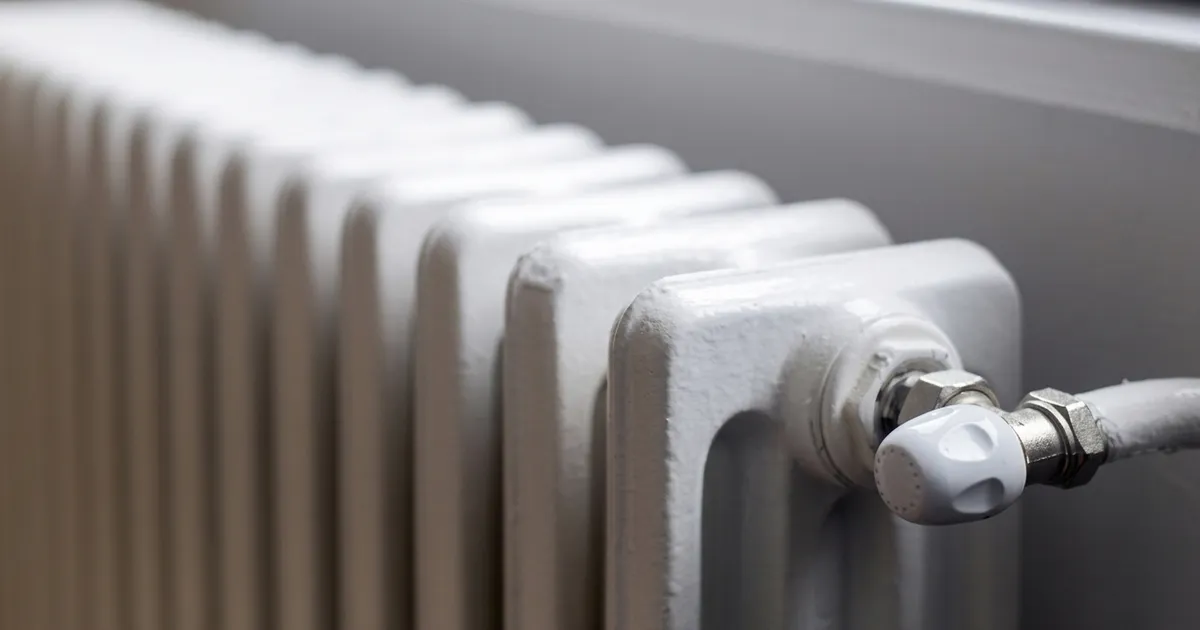
To bleed a hot water radiator, turn the heat off and let the system cool, hold a towel and cup under the bleed valve at the top corner, and open the valve with a radiator key until the hissing air turns into a steady trickle of water. Close it, move to the next radiator, then check the pressure gauge on the boiler. The catch is that a lot of older homes here heat with steam, not hot water, and steam radiators are never bled. Here is how to tell which you have, how to bleed in the right order, and when the problem is bigger than trapped air.
Hot Water or Steam? How to Tell in a Cincinnati Home
Check this first. Cast iron radiators look the same on both systems, and steam is common in the older houses in Clifton, Northside, and Walnut Hills. Go to the boiler and look for three things.
A sight glass. A steam boiler has a small glass tube on its side showing the water level, which should sit about half full. A hot water boiler doesn’t have one, because it is completely full of water.
The gauge. A hot water boiler has a round gauge that usually shows both pressure and temperature, and it reads about 12 to 15 psi when the system is cold. A steam boiler runs at very low pressure, about 2 psi or less. A hot water system also has an expansion tank, a small tank on the piping near the boiler.
The radiator itself. A one-pipe steam radiator has a single pipe going in at the bottom and a silver vent, about the size of a large thumb, sticking out from the side near the top on the opposite end. Two-pipe systems can be steam or hot water, so the pipe count alone won’t tell you. A hot water radiator has a small bleed valve at the top corner: a square stem, a slotted screw, or a little knurled knob, but never a vent body the size of the steam kind.
If you found a sight glass, skip ahead to the steam section. Everything between here and there is for hot water radiators and baseboard.
Signs a Radiator Needs Bleeding
Trapped air collects at the highest point in a radiator, so the classic sign is a radiator that is warm at the bottom and cool at the top while the heat is running. You may also hear gurgling or trickling in the radiators and pipes as the system circulates.
The opposite pattern, warm at the top and cold at the bottom, isn’t air. It usually means sludge has settled inside the radiator or water isn’t flowing through it well. Both need a technician, and bleeding won’t touch either.
How to Bleed a Hot Water Radiator, Step by Step
What You Need
A radiator key (sold at most hardware stores) or a flat screwdriver if your valves are slotted, an old towel, and a cup or small container. This Old House’s radiator guide covers the same basic steps if you want a second walkthrough.
The Steps
1. Turn the heat off and let it cool. Set the thermostat down so the boiler stops firing, then wait about 30 minutes. The water inside can be hot enough to scald.
2. Set up at the bleed valve. Fold the towel under the valve and hold the cup right under the opening.
3. Open the valve slowly. Turn the key counterclockwise about a quarter turn. You should hear a hiss as air escapes. Don’t keep turning: the valve only needs to crack open, and the small pin can come out if you unscrew it all the way.
4. Wait for water. When the hiss turns to sputtering and then a steady stream of water with no air in it, the radiator is clear. Water from an old system is often dark or rusty. That is normal.
5. Close it snug. Turn the key clockwise until it stops. Firm is enough. Overtightening can damage the seat and leave you with a slow drip.
6. Repeat, then check the gauge. Do every radiator that needs it, then turn the heat back on and feel each one once the system is running. Next, read the boiler pressure (covered below).
Which Radiator to Bleed First in a Cincinnati Home
Start on the lowest floor with the radiator farthest from the boiler, work back toward the boiler, then go up a floor and repeat the same far-to-near pattern. Finish with the top floor. Most heating guides recommend that order because air tends to settle where flow is weakest, which is the end of the pipe run, and bleeding near the boiler first can just push the air pocket somewhere else.
In a typical two-story Cincinnati house with the boiler in the basement, that means the first-floor radiator at the far end of the house goes first, and the second-floor radiator closest to the boiler goes last. If you only have one cold radiator, you can bleed just that one. Use the full sequence when several rooms are cold or the whole system has been drained and refilled.
Check the Boiler Pressure After Bleeding
Every radiator you bleed lets out a little water, and the boiler needs that water to circulate. With the system cool, the gauge on a hot water boiler should read about 12 to 15 psi. It rises as the system heats, which is normal.
Most hot water systems have an automatic fill valve (also called a pressure-reducing valve) on the cold water line feeding the boiler. It tops the system back up to its set pressure on its own, usually within a few minutes. If your gauge dipped and then recovered, you are done.
If the gauge stays below 12 psi, or your boiler has no automatic fill, call a technician rather than opening valves to add water yourself. Overfilling is easy to do, and at 30 psi the relief valve opens and dumps hot water on the basement floor. A gauge that reads high, getting near 30 psi, also needs a call.
How to Bleed Baseboard Heat
Hot water baseboard works the same way, but the bleed valves are harder to find. Look under the end cap of each baseboard run, or on the pipe at a high point where the run turns up toward the next floor. They look like a small screw or square stem on a brass fitting. Use the same steps: heat off, cool down, cup under the valve, open until water flows, close, check the gauge.
Many newer baseboard systems don’t have manual bleeders at all. They rely on an automatic air vent near the boiler and purge valves on the piping. If you can’t find a bleeder and a zone is gurgling or not heating, the zone needs to be purged, which means running water through it under pressure until the air is gone. That is a job for a technician.
Steam Radiators: Check the Vent, Don’t Bleed It
A steam radiator gets rid of its air on its own. When the boiler fires, steam pushes the air out through the silver vent on the side, and you hear a short hiss. When steam reaches the vent, it closes.
What does go wrong is the vent. Over the years, scale and debris clog it or it sticks shut, and the radiator stays cold because the air can’t get out. With the system off and cool, you can unscrew the vent by hand and blow through it. If no air passes, it is clogged and needs replacing. Swapping a vent is a reasonable homeowner job, but vents come in different venting speeds, and the wrong size on the wrong radiator can throw off how evenly the house heats.
Two other steam habits matter. The valve at the bottom of a one-pipe steam radiator should be fully open or fully closed, never halfway, because a partly closed valve traps water in the radiator. And the radiator should tilt slightly back toward that valve so water drains back to the boiler. A radiator that bangs or a vent that spits water often traces back to one of those, or to a water level that is too high in the boiler. Our post on boiler banging and kettling noises covers what each sound means.
When to Call a Pro in Cincinnati
Bleeding solves trapped air. When the symptom outlasts the bleeding, call for any of these:
The air keeps coming back. Air doesn’t get into a sealed hot water system without a reason. A small leak, a failing automatic air vent, or pressure low enough to let air in at the high points will keep refilling your radiators with air.
The pressure keeps dropping. If the gauge falls below 12 psi cold again days after you bled, the system is losing water somewhere: a leak, a dripping relief valve, or a problem at the expansion tank.
A radiator stays cold after bleeding. Water came out, so the air is gone, but the radiator still won’t heat. That usually points to a stuck radiator valve, a zone valve that won’t open, or a weak circulator pump.
Leaking valves. Water around a radiator valve stem or a bleed valve that won’t stop dripping after you close it.
Steam vents spitting water or hissing constantly. A vent that hisses the whole time the boiler runs, or spits water, has failed or is getting wet steam from a boiler or piping problem.
Here is our view: if you are bleeding the same radiator more than twice in one heating season, stop bleeding and find the cause. The U.S. Department of Energy’s Energy Saver Guide says to clear trapped air from hot water radiators once or twice a season. Past that, you are treating a symptom of a leak or a failing part while it gets worse. Our list of signs a boiler needs repair before winter covers the rest of what to watch for.
When You Don’t Need a Technician
If one or two radiators were cold at the top, you bled them, they now heat all the way across, and the gauge is back at 12 to 15 psi cold, you are finished. You don’t need us. The same goes for a steam vent that hisses for a few minutes when the boiler starts and then goes quiet. That is a vent doing its job.
Bleed once at the start of the heating season, again if the gurgling or cold tops come back, and leave the rest to the yearly service. Our guide to annual boiler maintenance explains what that visit checks, including the expansion tank, circulator, and relief valve that bleeding can’t reach.
Boiler and Radiator Service in Cincinnati
Degree of Comfort services hot water and steam heating systems across Cincinnati and the surrounding Tri-State, including Northern Kentucky and Southeast Indiana. We purge air from baseboard zones, replace steam vents, track down pressure loss and leaks, and repair circulators, zone valves, and radiator valves. See our boiler service page for the full list. We are family-owned, licensed and insured, with upfront, flat-rate pricing.
Call (513) 586-5107, join the Comfort Club to have your boiler tune-up scheduled for you each year, or request an estimate.
Frequently Asked Questions
Let Degree of Comfort Handle It
Our licensed technicians serve Cincinnati and surrounding areas. Same-day service available.
Call (513) 586-5107