

Key Takeaways
- The Ohio Fire Code requires CO detection in residential buildings, new and existing, when a unit has a fuel-burning appliance, a gas furnace, a fuel-burning appliance elsewhere in the building, or an attached garage. Existing buildings had until January 1, 2019.
- In existing buildings, battery-powered alarms are allowed. New construction needs alarms wired to the building’s power with battery backup.
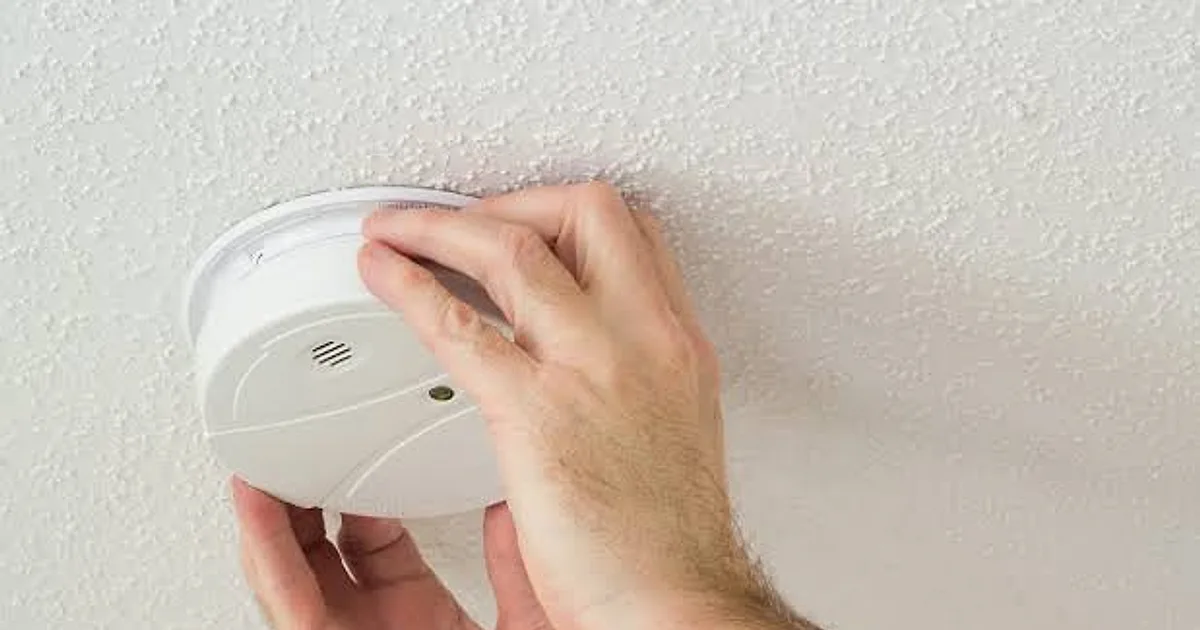
- Put them outside each sleeping area, near the bedrooms, and inside any bedroom that has a fuel-burning appliance in it or its attached bath.
- Replace any alarm that stops working or gives its end-of-life signal. Test at every turnover and give tenants written instructions.
In Ohio, landlords must provide carbon monoxide detection in rental units that have a gas or other fuel-burning appliance, are heated by a fuel-burning forced-air furnace, are in a building with a fuel-burning appliance, or are in a building with an attached garage. The requirement comes from the Ohio Fire Code, which applies it to existing residential buildings as well as new ones, with a deadline of January 1, 2019. In an existing building, a battery-powered CO alarm meets the rule. The alarm goes outside each sleeping area near the bedrooms, and the landlord has to replace it when it fails. Here is what that means in practice for Cincinnati rentals.
What the Ohio Fire Code Requires
The 2017 Ohio Fire Code added carbon monoxide detection requirements for residential (Group R) occupancies, and unusually, it applied them to existing buildings, not just new construction. According to the Ohio State Fire Marshal’s technical bulletin on the rule, existing buildings that need CO detection had to have it on or before January 1, 2019. We are heating contractors, not lawyers, so treat this as a summary and confirm how it applies to your property with your local fire official.
A dwelling unit needs CO detection if any one of these four conditions applies:
1. The unit has a fuel-burning appliance or fireplace. A gas furnace, boiler, water heater, range, dryer, or fireplace inside the unit. There is no exception for this one.
2. The unit is served by a fuel-burning forced-air furnace. Even if the furnace is in a shared basement, the unit it heats needs CO detection, unless the first room served by each main duct has CO detection that automatically signals an approved location, which is rare in rental housing.
3. The building contains a fuel-burning appliance or fireplace. A gas boiler or water heater in the basement counts. The exceptions: there are no openings connecting the appliance area to the unit, or CO detection is installed between them or on the ceiling of the room with the appliance.
4. The building has an attached private garage. Exceptions apply if there are no openings between the garage and the unit, the unit is more than one story above or below the garage, the garage connects through an open-ended corridor, or CO detection is installed between the garage openings and the unit.
For most Cincinnati rentals heated with natural gas, at least one of those applies.
What It Means for Cincinnati Rental Buildings
Take a typical older Cincinnati multi-family building: several apartments over a basement with a gas boiler and a gas water heater. Every unit is in a building that contains fuel-burning appliances, which is condition 3. Unless the basement is fully separated from the units, or there is CO detection on the boiler room ceiling or between the basement and the units, each apartment needs CO detection. If each unit has its own gas furnace or water heater, that is condition 1, and there is no exception.
The same thinking applies to a duplex with a gas furnace in a shared basement, a single-family rental with an attached garage, or a unit with a gas range. The rule is clearest for apartment buildings. How local officials apply it to single-family and two-family rentals can vary, so confirm with your fire department. Our view: put a CO alarm in every rental unit with any gas appliance, whether or not an exception might technically apply. The CDC puts unintentional, non-fire carbon monoxide deaths in the U.S. at more than 400 a year, and an alarm costs less than a service call.
Where CO Detectors Go in a Cincinnati Rental
Inside a dwelling unit, CO detection goes outside each separate sleeping area, in the immediate vicinity of the bedrooms. If a fuel-burning appliance is inside a bedroom or its attached bathroom, a detector also goes in that bedroom. A unit with bedrooms at opposite ends of the apartment needs one outside each sleeping area, not just one in the hallway.
Beyond the minimum, a detector on each level and one near the furnace or boiler room door gives earlier warning. Follow the manufacturer’s mounting instructions, including how far to keep the alarm from cooking appliances and bathrooms, where it can give nuisance alarms.
Which Type of CO Detector to Use
CO alarms have to be listed to UL 2034. Combination smoke and CO alarms are allowed if they carry both the UL 2034 and UL 217 listings. In an existing building, battery-only alarms satisfy the Ohio Fire Code. In new construction, alarms have to be wired to the building’s power with battery backup, and new buildings in the City of Cincinnati require CO alarms as part of the permit.
For rentals, sealed 10-year battery alarms are worth the small extra cost. Tenants can’t take the battery out to use somewhere else, there is no battery to replace at turnover, and the alarm tells you when it has reached the end of its life.
Who Maintains CO Detectors: Landlord or Tenant?
The Ohio Fire Code requires CO alarms to be maintained, and any alarm that stops working or gives an end-of-life signal must be replaced. Separately, Ohio Revised Code 5321.04 requires landlords to comply with the building, housing, health, and safety codes that apply to the property, and to keep the appliances they supply in good and safe working order. In practice, that puts installing and replacing alarms on the landlord.
Tenants have a part too. Ohio law requires tenants not to damage or remove fixtures and appliances on the premises, and a good lease spells out that they must not disable alarms, should test them monthly, and must report a chirping or failed alarm right away. Put that in writing, and keep a record of when you tested each alarm.
A CO Detector Checklist for Cincinnati Landlords
At every turnover: test each alarm, check the replace-by date on the back, and replace any that are expired or missing.
Every fall: test alarms during your heating tune-up visit. It is part of our pre-winter HVAC checklist for rental properties.
At move-in: show the tenant where each alarm is, how to test it, and the difference between a chirp (low battery or end of life) and a full alarm.
In writing: tell tenants that if a CO alarm sounds, everyone leaves the unit, calls 911 from outside, and doesn’t go back in until responders say it is safe. Then call you.
In your records: the date each alarm was installed and tested, by unit. It is the simplest proof you met your duty.
When a CO Alarm Goes Off in a Rental
A real CO alarm means the source has to be found before anyone relies on that appliance again. After responders clear the unit, have a licensed technician inspect every fuel-burning appliance: the furnace or boiler, the water heater, and their venting. Common causes include a blocked or disconnected flue, a cracked heat exchanger, a furnace that is burning poorly, or a water heater that is back-drafting into the room. A yearly furnace tune-up or boiler service includes a combustion and CO check that catches most of these before an alarm ever sounds. If the tenant is without heat while the problem is fixed, our landlord guide for when a tenant has no heat covers what to do next.
When You Don’t Need a Contractor
Installing battery-powered CO alarms, testing them, and replacing expired ones is a job most landlords can do themselves with a drill and a ladder. You don’t need an HVAC company for it. Call a licensed technician when an alarm has actually gone off, when alarms keep sounding in the same unit with no clear cause, or when you want the furnaces, boilers, and water heaters checked for combustion problems before winter.
Get Your Cincinnati Rentals Checked Before Winter
Degree of Comfort inspects and services furnaces, boilers, and water heaters in rental homes and apartment buildings across Cincinnati and the surrounding Tri-State, including Northern Kentucky and Southeast Indiana. Every tune-up includes a carbon monoxide check and a look at the venting, and we will tell you if a unit is missing CO detection where it needs it. We are family-owned, licensed and insured, with upfront, flat-rate pricing and 24/7 service. See our furnace maintenance page for details.
Call (513) 586-5107 or request an estimate for your properties.
Frequently Asked Questions
Let Degree of Comfort Handle It
Our licensed technicians serve Cincinnati and surrounding areas. Same-day service available.
Call (513) 586-5107