
Key Takeaways
- Ohio law doesn’t name furnace filters. The landlord must keep the heating system in good and safe working order, and the tenant must not damage it. Who swaps the filter is up to the lease.
- The landlord can’t hand off the furnace itself. A lease can assign filter changes to the tenant, but Ohio law doesn’t let a lease waive the landlord’s duty to keep the heat working.
- The system that works best: the landlord supplies the right filters, the tenant changes them, and the landlord checks them at every visit. Write the filter size on the furnace.
- You don’t need a technician to change a filter. You need one when the furnace still won’t run right after a clean filter goes in.
In a Cincinnati rental, the furnace filter is whoever’s job the lease says it is. Ohio law doesn’t mention filters. It makes the landlord responsible for keeping the heating system in good and safe working order, and it makes the tenant responsible for not damaging it. Most landlords split it: the landlord buys the filters, the tenant changes them, and the landlord checks at every visit. Here is what the law says, lease wording you can adapt, systems that actually get filters changed, and who pays when nobody did.
What Ohio Law Says About Furnace Filters in Cincinnati Rentals
We are heating contractors, not lawyers, so confirm the details with your attorney. Two sections of Ohio’s landlord-tenant law set the frame.
Landlord duties. Ohio Revised Code 5321.04 requires landlords to keep the premises fit and habitable, to supply reasonable heat at all times, and to maintain in good and safe working order the heating, ventilating, and air conditioning fixtures and appliances they supply. A furnace is one of those appliances.
Tenant duties. Ohio Revised Code 5321.05 requires tenants to keep their part of the premises safe and sanitary, to use electrical and plumbing fixtures properly, and not to intentionally or negligently damage any fixture, appliance, or other part of the premises. It also requires tenants to maintain appliances the landlord supplies when a written rental agreement says the tenant must.
That last line matters most here. The statute names a range, refrigerator, washer, dryer, and dishwasher, then adds “or other appliances supplied by the landlord and required to be maintained by the tenant under the terms and conditions of a written rental agreement.” A routine task like a filter change can be one of those terms, but only if it is in writing.
Ohio Law Doesn’t Name Filters, So the Lease Decides
Neither 5321.04 nor 5321.05 says the word filter. So the default comes down to who supplied the furnace (the landlord) and what the lease adds on top.
If the lease is silent, the safe assumption is that the filter is the landlord’s job. The furnace is the landlord’s appliance, and keeping it in good working order includes the parts that wear out. A tenant who never touched the filter, with nothing in writing telling them to, is hard to blame for it.
If the lease assigns filter changes to the tenant, the tenant takes on that task. The landlord does not hand off the furnace. Ohio law says no provision of this chapter can be modified or waived by agreement, apart from narrow exceptions. In practice that means a tenant can be made responsible for swapping a filter, but the landlord is still the one who must fix the furnace when it fails, and still the one the city calls when there is no heat.
Sample Lease Language for Filter Changes
These are plain examples to bring to your attorney or property manager, not legal advice. Pick the one that matches how you actually run the property, because a clause you don’t follow is worse than none.
Tenant Changes, Landlord Supplies
“Landlord will supply furnace air filters in the size listed on the furnace. Tenant will replace the filter at least every [60/90] days, or sooner if it looks dirty, and will tell Landlord when the supply runs low. Tenant will report any heating problem to Landlord promptly.”
Tenant Changes and Buys
“Tenant will buy and install a [16x25x1, MERV 8] furnace filter at least every [60/90] days. Landlord may inspect the filter during any scheduled entry with notice.”
Landlord Handles It
“Landlord will change the furnace filter on a set schedule and will give notice before each entry. Tenant will not block access to the furnace.”
Whichever you choose, name the filter size, the interval, and who buys them. Our post on how often to change a furnace filter covers what interval fits which homes. Also remember the entry rule in 5321.04: 24 hours is presumed reasonable notice, except in an emergency. A clause that lets you check the filter still needs that notice.
Filter Systems That Work in Cincinnati Rentals
Lease wording only gets a filter changed if the tenant remembers and has the right one on hand. These are the setups that close that gap.
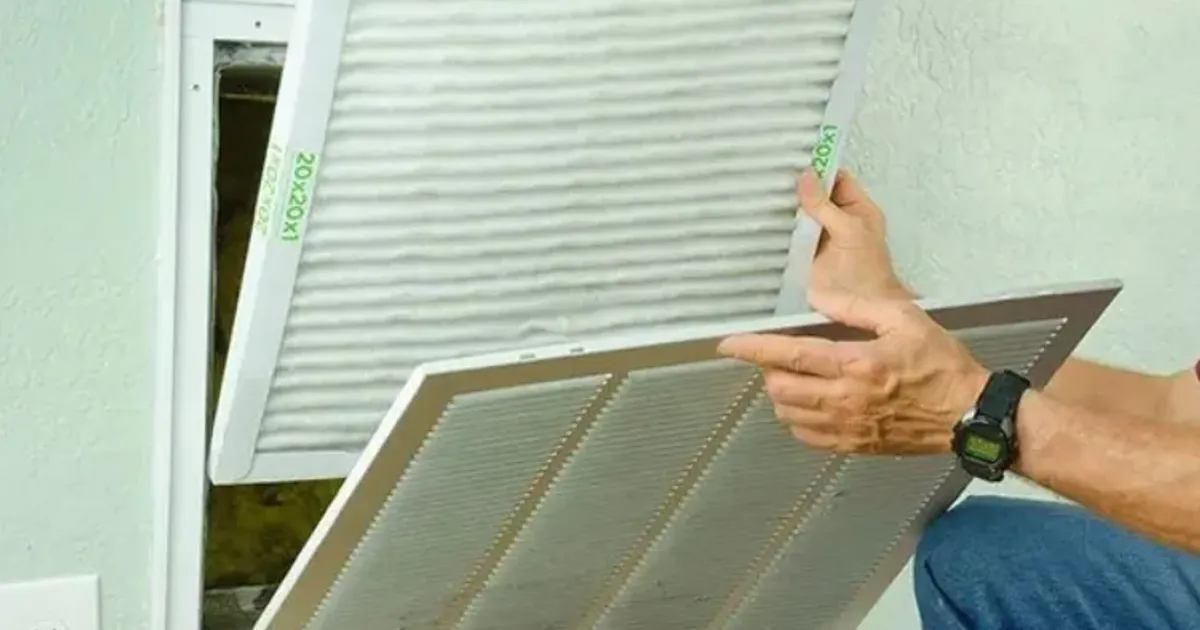
Write the size on the furnace. Use a paint marker on the cabinet next to the filter slot: size, thickness, and the arrow direction for airflow. Tenants who buy the wrong size end up bending a filter to fit or leaving gaps around it, and dirty air goes around it.
Leave a supply by the furnace. Stock a few filters at move-in. If the right filter is sitting next to the furnace, it gets changed. If the tenant has to find one at the store, it often doesn’t.
Ship filters to the unit. Several filter subscription services deliver the right size on a set schedule. You pay, the box lands at the door, and the arrival is the reminder. That works well for landlords who rarely visit the property.
Check at every visit. Any time you or your technician is inside for a scheduled reason, pull the filter and look. Take a dated photo. Our preventive maintenance plan for Cincinnati rentals builds those checks into a yearly schedule.
Date the filter. Ask tenants to write the install date on the filter frame. It takes five seconds and settles any question about when it was last changed.
What a Neglected Filter Does to the Furnace, and Who Pays
A clogged filter starves the furnace of air. The heat exchanger runs hotter than it should, the high-limit safety switch trips, and the burners shut off. The blower keeps running, the house cools off, and the furnace fires again a few minutes later. To a tenant that looks like a broken furnace. Our post on furnace short cycling explains that pattern in more detail.
Done once, it is a nuisance call. Done all winter, it wears out parts. ENERGY STAR puts it plainly: a dirty filter can increase energy costs and damage your equipment, leading to early failure. In summer the same filter restricts air across the air conditioner coil, which can freeze it.
Here is our view: the landlord should buy the filters, even when the tenant changes them. A furnace replacement in Cincinnati typically runs $3,000 to $10,000 installed. Filters are the cheapest item standing between you and that bill, and supplying them removes the tenant’s best excuse.
Who Pays for the Damage
Under 5321.05, if a tenant breaks one of their obligations, the landlord may recover actual damages that result, plus reasonable attorney’s fees. If the lease made the tenant responsible for filters and the tenant ignored it, that is the argument a landlord would make.
It is a hard argument to win. You have to show the filter caused the specific failure, not age or a part that was going to fail anyway. Furnaces typically last 15 to 20 years, and a 17-year-old furnace with a dirty filter is still a 17-year-old furnace. Meanwhile, the repair is still yours to make, and fast: in Cincinnati units where tenants don’t control their own heat, the city can fine you $300 for the first day without adequate heat and $750 for each day after. Our landlord guide for when a tenant has no heat covers that response. Fix first, sort out the bill with your attorney later.
This is where dated photos and a written filter schedule pay off. They are the record that shows what was done, and when.
Which Filter to Buy: MERV Ratings in Plain Terms
Filters are rated by MERV, or Minimum Efficiency Reporting Value. According to the EPA, MERV reports a filter’s ability to capture particles between 0.3 and 10 microns, on a scale from 1 to 16. Higher numbers catch smaller particles.
The EPA suggests that if you upgrade, choose at least MERV 13, or as high a rating as your system fan and filter slot can accommodate. That second half is the part rentals get wrong. A thick, high-MERV filter in a furnace not built for it can restrict air the same way a dirty filter does. For most rental furnaces with a 1-inch slot, a mid-range pleated filter that gets changed on schedule does more good than a high-MERV filter left in for six months. If you want to go higher, ask your technician what the blower can handle, then put that rating in the lease and on the furnace.
Multi-Unit Buildings and Shared Systems in Cincinnati
The answer changes when the tenant can’t reach the equipment.
Shared boiler or central system. If one boiler heats the whole building, the filter question mostly disappears because a hot water or steam boiler has no air filter. Any air handlers in a shared mechanical room are the landlord’s to service. Tenants can’t reach them and shouldn’t be asked to.
Furnace in a locked or common space. If each unit has its own furnace but it sits in a locked basement or a hallway closet, the landlord should own the filter. Assigning a task the tenant can’t physically do doesn’t hold up.
Filter behind a return grille. Many apartments have the filter in a wall or ceiling grille inside the unit. Those are easy for tenants to change and fit the supply-and-check system above. Label the grille with the size.
Ductless and through-wall units. Mini-splits and through-wall units often have washable screens. Rinsing them is a reasonable tenant task, written into the lease the same way.
Cincinnati’s heat rule applies only to units where tenants don’t control their own heat, which in practice means shared-heat buildings. In those units, once the outdoor temperature stays below 60 degrees for 24 consecutive hours, the inside must be 70 degrees or warmer. No lease clause moves that onto a tenant.
When You Don’t Need a Technician
Changing a filter is not a service call. If you or your tenant can open the slot, read the size, and slide a new one in with the arrow pointing toward the furnace, you don’t need us for that, and you shouldn’t pay anyone to do it.
If the furnace quit and the filter was gray and packed, change it, then turn the furnace off at the switch for a minute and back on. If it runs through a full heating cycle and the house warms up, you may be done. Call a technician if it shuts off again, if the burners won’t light, if you smell gas, or if the filter was clean to begin with. Those point to a problem a filter won’t fix, and our furnace repair service is the next step.
Help With Rental Furnaces in Cincinnati
Degree of Comfort services rental homes and multi-unit buildings across Cincinnati and the surrounding Tri-State, including Northern Kentucky and Southeast Indiana. We repair and tune up rental furnaces and boilers, and our technicians can note the filter size and condition for each unit while they are there. Our Comfort Club puts members ahead of non-members when something breaks and takes up to 20% off repairs. We are family-owned, licensed and insured, with upfront, flat-rate pricing.
Call (513) 586-5107 or request an estimate for your properties.
Frequently Asked Questions
Let Degree of Comfort Handle It
Our licensed technicians serve Cincinnati and surrounding areas. Same-day service available.
Call (513) 586-5107