

Key Takeaways
- A preventive maintenance plan turns surprise repairs into scheduled visits: heating checked in the fall, cooling in the spring, and water heaters, drains, and detectors checked once a year.
- Skipped maintenance is expensive in Cincinnati. In units where tenants don’t control their own heat, the city requires 70 degrees inside once it stays below 60 outside for 24 hours, and can fine you $300 for the first day without heat and $750 for each day after.
- Ohio law already requires the upkeep. Landlords must keep supplied heating, plumbing, electrical, and air conditioning in good and safe working order.
- You may not need a plan if you own one newer rental and handle the basics yourself. Past two or three units, a schedule someone else keeps usually pays for itself.
Cincinnati landlords need a preventive maintenance plan because the repairs it prevents cost more than the visits it takes. A plan puts every furnace, air conditioner, and water heater on a schedule: heating checked in September or October, cooling in April or May, and plumbing and safety checks once a year. That catches worn parts before they fail on a January night, keeps you inside Ohio’s landlord rules, and stretches a furnace closer to 20 years than 15. Here is what a plan should cover, what skipping it costs, a yearly schedule you can copy, and when a plan isn’t worth paying for.
What a Preventive Maintenance Plan Covers in a Cincinnati Rental
A good plan covers the systems that cause emergency calls, in the season before they get worked hard. For most Cincinnati rentals, that list is short.
Heating, Every Fall
A furnace or boiler tune-up before the first cold snap. The technician checks the burners, ignition, gas pressure, flue venting, and electrical connections, looks over the heat exchanger for cracks, and tests for carbon monoxide. ENERGY STAR recommends a contractor check-up on the heating system every fall for the same reasons: a dirty burner or cracked heat exchanger makes the equipment run less safely and less efficiently. Our furnace maintenance service covers what that visit includes.
Cooling, Every Spring
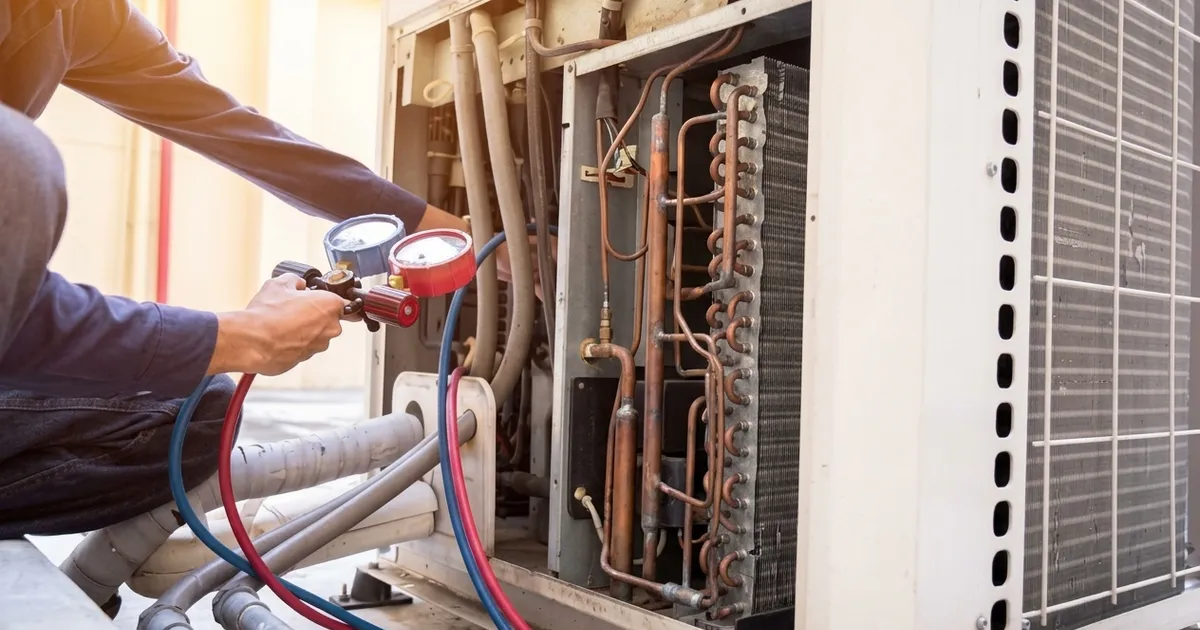
An air conditioner tune-up in April or May: clean the coils, check refrigerant, test the electrical parts, clear the condensate drain, and measure airflow. A plugged condensate drain is a common source of water damage in rentals, and the tenant rarely notices until the ceiling below it stains.
Water Heaters, Drains, and Detectors, Once a Year
Inspect each water heater for leaks, rust, and a working relief valve. Dye test the toilets for silent leaks, since you often pay the water bill even when the tenant pays gas. Test every smoke and carbon monoxide alarm and replace batteries. Our post on carbon monoxide detectors in Ohio rentals covers which units need them and where they go.
Filters, on a Schedule Someone Owns
ENERGY STAR says to check filters monthly. In a rental, the real question is who does it. Write it into the lease, leave a stack of the right size by the furnace, and check them yourself at every visit. A clogged filter makes a furnace overheat, and its safety switch shuts the burners off, which looks to a tenant exactly like a broken furnace.
What Skipping Maintenance Costs Cincinnati Landlords
Without a plan, you find out a system is failing when a tenant calls. That call usually comes on the coldest night of the year, when every heating company in Cincinnati is booked and after-hours rates apply.
Here is our view: no rental with gas heat should go into November without a fall tune-up. In Cincinnati units where tenants don’t control their own heat, the inside must stay at 70 degrees or warmer once the outdoor temperature has been below 60 degrees for 24 hours, and the city can fine you $300 for the first day without adequate heat and $750 for each day after. A three-day wait for a part is $1,800 in fines before you’ve paid for the repair. Our landlord guide for when a tenant has no heat walks through that response step by step.
The slower cost is equipment life. Most furnaces last 15 to 20 years. One that gets a tune-up every fall tends to land near 20, and one that never sees a technician tends to land near 15. With a furnace replacement in Cincinnati typically running $3,000 to $10,000 installed, those five years matter. Our guide to budgeting for furnace replacement across multiple rentals shows how to plan for the ones that are due.
Then there are tenants. A tenant who loses heat twice in one winter is less likely to renew, and every vacant month is a month of rent you don’t get back.
Ohio and Cincinnati Rules a Maintenance Plan Helps You Meet
We are heating contractors, not lawyers, so check the specifics with your attorney. The general rule is in Ohio Revised Code 5321.04. It requires landlords to keep the premises fit and habitable, to supply reasonable heat and hot water, and to keep the heating, plumbing, electrical, ventilating, and air conditioning fixtures and appliances they supply in good and safe working order. A maintenance plan, with dated records of each visit, is the simplest way to show you did that.
The same law presumes 24 hours is reasonable notice before you enter a unit, except in an emergency. A planned visit gives you time to send that notice. An emergency call doesn’t.
Cincinnati also runs a Residential Rental Inspection program in seven neighborhoods: Avondale, Clifton-Fairview-University Heights, College Hill, East Price Hill, Madisonville, West Price Hill, and Westwood. Properties with unresolved code violations or a history of health and safety violations can be required to get a rental inspection certificate. If one of your properties there becomes eligible, the city can review your whole portfolio inside city limits. Regular maintenance keeps small problems from turning into violations on the record.
A Yearly Maintenance Schedule for Cincinnati Rental Properties
Cincinnati’s first freeze comes around October 25 in a typical year, so heating work belongs in September and early October. Here is a schedule that fits most single-family rentals and small multi-unit buildings.
September to early October: furnace or boiler tune-up, carbon monoxide test, filter change, thermostat check. Test smoke and CO alarms. Shut off and drain outdoor hose bibs. Our pre-winter HVAC checklist for rental properties lists each item.
January: filter check or change. Confirm tenants know where the furnace switch and water shutoff are.
April to May: air conditioner tune-up, condensate drain cleared, filter change. Check the sump pump before spring storms.
Once a year, any season: water heater inspection, toilet dye test, look for leaks under sinks, and test GFCI outlets.
At every turnover: a full walk-through of heating, cooling, plumbing, and electrical. Our rental turnover checklist covers it.
Keep one record per unit with the equipment ages, filter sizes, and the date and notes from each visit. That record is what makes the plan useful when you are budgeting, selling, or answering a code complaint.
Doing It Yourself vs. a Maintenance Membership
Some of this is landlord work. Filters, alarm tests, hose bibs, and dye tests take a few minutes each and don’t need a license. Anything involving gas, combustion, refrigerant, or the inside of an electrical panel does. That is the part a maintenance plan with a contractor covers.
You can book those visits one at a time. The catch is remembering to, for every unit, every season, and getting a slot in October when everyone else calls too. A membership solves the scheduling: the contractor calls you, and members get booked first when something breaks.
How the Comfort Club Works for Cincinnati Landlords
Our Comfort Club is the maintenance membership we offer across Cincinnati and the Tri-State. For a landlord, these are the parts that matter:
We schedule it. We contact you when each tune-up is due, so no unit gets skipped.
Priority service. When a member calls with a repair, the job is scheduled ahead of non-members. On a no-heat call in a shared-heat unit, that can be the difference between one day of fines and three.
Up to 20% off repairs on plumbing, heating, and cooling work from our price book, and reduced diagnostic fees, including nights and weekends.
The heating visit includes the burners, flue venting, gas pressure, ignition, electrical controls, a visual check of the heat exchanger, and a carbon monoxide test. The plumbing visit includes a water heater safety inspection, toilet dye tests, a gas leak check, and a one-time sewer line camera inspection.
Water heater rebates: $25 off a tank water heater and $50 off a tankless one for each consecutive year of membership, and 5% off list price on a full heating or cooling system.
Membership is billed to your card each month. Call us for pricing on your properties.
When You Don’t Need a Maintenance Plan
A plan isn’t for every landlord. If you own a single rental with a furnace and air conditioner under five years old, you are comfortable changing filters and testing alarms, and you’ll actually book a tune-up each fall, you can skip the membership and call us for the one visit a year. Newer equipment under warranty rarely needs more than that.
The same goes for a building with its own on-site maintenance tech who is licensed for gas work. You don’t need to pay twice. Where a plan starts paying off is two or three units and up, older equipment, shared-heat buildings, or any rental you don’t visit often.
Set Up a Maintenance Plan for Your Cincinnati Rentals
Degree of Comfort services rental homes and multi-unit buildings across Cincinnati and the surrounding Tri-State, including Northern Kentucky and Southeast Indiana. We can tune up every unit in your portfolio, record the age and condition of each system, and put them all on one schedule. We are family-owned, licensed and insured, with upfront, flat-rate pricing.
Call (513) 586-5107, join the Comfort Club, or request an estimate for your properties.
Frequently Asked Questions
Let Degree of Comfort Handle It
Our licensed technicians serve Cincinnati and surrounding areas. Same-day service available.
Call (513) 586-5107