

Key Takeaways
- Change your furnace filter every 1 to 3 months for most homes — more often with pets, allergies, or heavy use.
- A clogged filter is the cause of countless service calls — it chokes airflow, raises bills, and can shut the system down.
- Match the filter to your system — a MERV rating of 8 to 13 filters well without starving most home systems of airflow.
- Check it monthly — if it looks gray and matted, replace it, and let furnace maintenance handle the deeper checks.
For most homes, every 1 to 3 months. That is the short answer, and it covers the majority of households — but how often you really need to change your furnace filter depends on the filter type, your home, and what is in your air.
It is also the single cheapest, highest-impact thing you can do for your heating system. A dirty filter is behind a surprising number of the breakdowns and high bills we get called about. Here is how to know when to change yours, how to pick the right one, and what neglecting it actually costs.
Why Furnace Filters Matter
The filter has two jobs. It traps dust, pollen, pet dander, and other particles so they do not circulate through your home, and it protects the furnace itself by keeping that debris off the blower and other internal parts. When it is clean, air moves freely and the system runs the way it was designed to. When it is clogged, everything downstream suffers.
Its Effect on Your Indoor Air
The air in your filter passes through it again and again, so a dirty one stops doing its job and lets dust and allergens recirculate. That matters most for anyone in the home with asthma, allergies, or other respiratory issues. A fresh filter is one of the simplest pieces of good indoor air quality, and for homes that need more, a dedicated air-cleaning system goes further.
How Often Should I Change My Furnace Filter?
Every 1 to 3 months is the general rule, but the right interval for your home depends on a few things. The best habit is to check the filter monthly and let what you see set your schedule.
What Changes How Often You Need To
Pets add hair and dander, so homes with them clog filters faster. Allergies or asthma in the household mean you will want to change filters more often to keep the air clean. Smoking, nearby construction, and heavy heating or cooling season all shorten a filter’s life. And the filter type itself matters — a thin fiberglass filter needs changing far more often than a thick pleated one.
General Guidelines by Filter Type
As a starting point: a basic 1-inch fiberglass filter should be changed every 30 days. A 1-inch pleated filter typically lasts 1 to 3 months. Thicker 4- to 5-inch pleated media filters can go 3 to 6 months. High-efficiency or HEPA-style filters in compatible systems may last up to a year. Always check the manufacturer’s rating on your specific filter, and shorten the interval if your home runs dusty.
Signs Your Furnace Filter Needs Changing
Even if you are not sure how long it has been, the filter and your home will tell you. Watch for these.
Visible Dust and Grime on the Filter
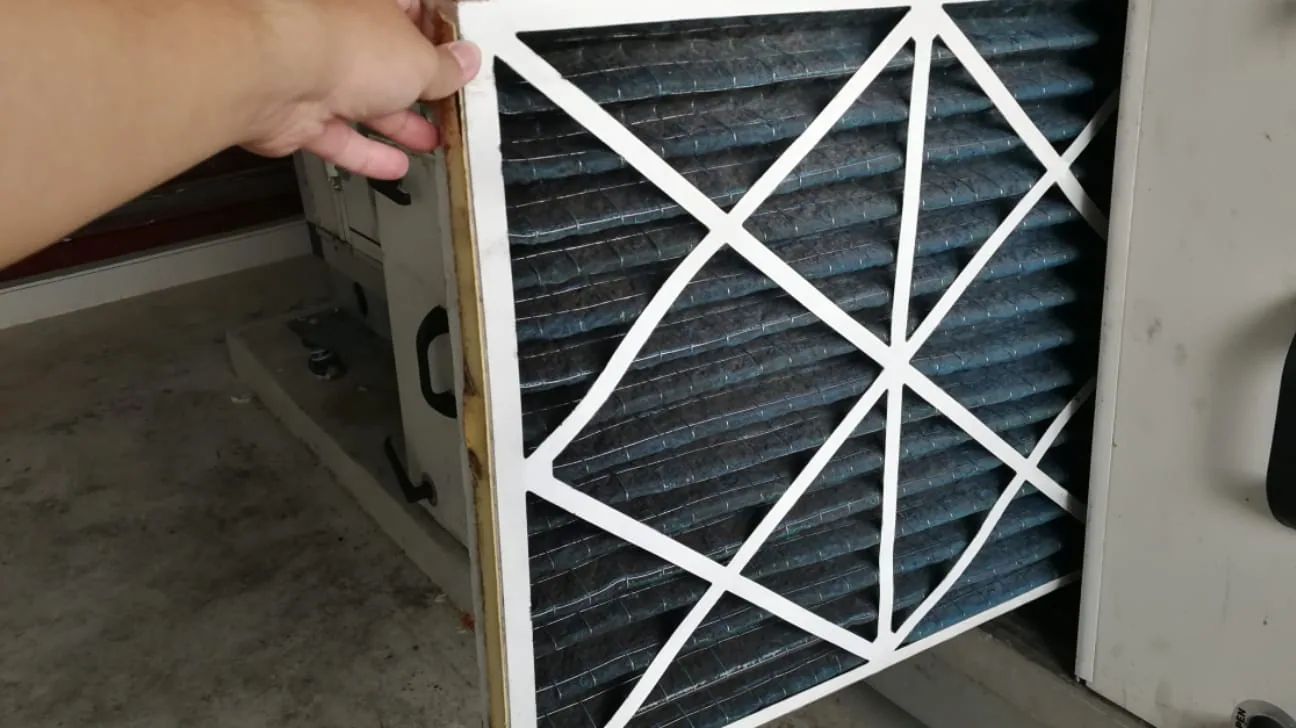
Pull the filter and hold it up to a light. If you cannot see light through it, or it looks gray and matted with dust, it is done. This is the most reliable check, and it is why a monthly look is worth the minute it takes.
Weaker Airflow From the Vents
If the air coming from your registers feels weak, or some rooms are not heating like they used to, a clogged filter restricting airflow is a common cause. The furnace is working hard and little is getting through.
More Dust Around the House
When the filter can no longer catch what it should, that dust settles on furniture, shelves, and floors instead. If you are dusting more often than usual, the filter may be overdue.
Musty or Stale Odors
A filter saturated with trapped debris can start to smell, and that odor gets pushed through the home every time the system runs. A fresh filter often clears it up.
A Creeping Energy Bill
A furnace fighting a clogged filter burns more energy to move the same air, and it shows up on the bill. If your heating costs climb without an obvious reason, the filter is an easy first thing to rule out.
Choosing the Right Furnace Filter
Not all filters are equal, and the most expensive one is not automatically the best choice for your system. There are three broad types. Fiberglass filters are cheap and protect the equipment but barely improve air quality, and they need changing monthly. Pleated filters cost a little more, last longer, and catch much more, which makes them the right pick for most homes. HEPA-style filters capture up to 99.97 percent of particles, but they are dense and not every residential system can push air through them — using one your system was not built for does more harm than good.
Understanding MERV Ratings
MERV (Minimum Efficiency Reporting Value) measures how well a filter captures particles, on a scale from 1 to 20. Higher numbers catch more, but they also resist airflow more, and a filter that is too restrictive makes your furnace work harder. For most homes, a MERV rating between 8 and 13 is the sweet spot — strong filtration without starving the system. If you are unsure what your system can handle, that is worth a quick question to a technician rather than a guess.
What Happens If You Skip It
Letting the filter go is one of the most common reasons a furnace ends up needing repair. The restricted airflow makes the system run longer and hotter, which drives up energy bills and wears out components early. In gas furnaces, severe airflow restriction can cause the unit to overheat and trip its safety limit switch, shutting it down entirely — a no-heat call that a five-dollar filter would have prevented. If your furnace keeps shutting off, a clogged filter is the first thing to check before calling for furnace repair.
Does My AC Use the Same Filter?
In most homes, yes. The furnace and air conditioner share the same air handler and the same filter, so the one you change in winter is doing double duty in summer. That is why filter changes matter year-round, not just during heating season, and why it pairs naturally with regular AC maintenance and furnace maintenance.
The Payoff of Staying On Top of It
Changing a filter takes two minutes and a few dollars, and it pays back out of proportion to the effort. You get lower energy bills, cleaner air, fewer breakdowns, and a heating and cooling system that lasts longer. It is the rare piece of home maintenance that is genuinely easy and genuinely worth it.
Let Degree of Comfort Keep Your System Running
If you would rather have a pro handle filters as part of a full system check — or your furnace is already acting up — Degree of Comfort can help. We serve homeowners across Cincinnati and the surrounding Tri-State, including Northern Kentucky and Southeast Indiana, and we are family-owned, licensed and insured, with upfront, flat-rate pricing and a satisfaction guarantee.
Want your furnace checked and the right filter dialed in? Call (513) 586-5107, ask about furnace maintenance, or request an estimate and let our team handle it.
Frequently Asked Questions
Let Degree of Comfort Handle It
Our licensed technicians serve Cincinnati and surrounding areas. Same-day service available.
Call (513) 586-5107