
Key Takeaways
- Older homes heat unevenly because they were built for a different heating system. Ducts added later are often undersized, leaky, and missing return vents upstairs.
- Start with the free checks: the filter, closed or blocked registers, and the damper handles on the ducts in your basement.
- Fix the ducts and the attic before the furnace. A typical house loses 20 to 30 percent of its duct air to leaks, and a bigger furnace won’t fix that.
- For a room that never keeps up, like a third floor or an addition, a ductless mini-split or zoning usually works better than more ductwork.
Older Cincinnati homes heat unevenly mostly because their ductwork was added after the house was built. Many houses from the late 1800s and early 1900s were heated with radiators or a gravity furnace, and the forced-air ducts that came later were squeezed through closets and walls wherever they fit. The result is long, narrow runs to the upper floors, few return vents upstairs, and plenty of leaks. Add thin attic insulation and old windows, and the far rooms lose heat faster than it arrives. Here is how to find which problem your house has, and what fixes it.
Why Is Upstairs Colder Than Downstairs in Winter?
Heat rises, so the upstairs should be warmer. In an older house it often isn’t, for three reasons. The duct runs to the second and third floors are the longest in the house, so less warm air makes it there. There is usually no return vent upstairs, so the air that does arrive has nowhere to go and the rooms stop taking more. And the top floor sits under the attic, where many older homes have little insulation, so it loses heat fastest.
This is common in neighborhoods like Northside, Clifton, Walnut Hills, and Price Hill, where much of the housing dates to the late 1800s and early 1900s, and in the tall, narrow houses of Over-the-Rhine.
Why Is One Room Colder Than the Rest of the House?
A single cold room usually has one of these causes:
It Is at the End of the Longest Duct
The room farthest from the furnace gets the weakest airflow, especially if its duct runs through an unheated space like an attic or crawlspace. Hold your hand over the register with the furnace running. Weak airflow compared with other rooms points to the duct.
It Was Added Later
Enclosed porches, back additions, and finished attics were often tied into an existing duct system that was never sized for them. They also tend to have more outside walls and less insulation than the original house.
The Walls Have Little or No Insulation
Many homes built before the 1940s were framed with open wall cavities that run from the basement to the attic, and little or no insulation. Cold air moves through those cavities, and a corner room with two outside walls feels it most.
The Windows Are Original
Single-pane windows lose heat quickly, and a room with several of them will run colder even when the heat reaching it is fine.
What You Can Check Yourself
Before you call anyone, spend 20 minutes on these. They cost nothing and fix more cold rooms than you would expect.
Change the filter. A clogged filter starves the whole system of airflow, and the rooms at the end of the longest ducts notice first. Our guide on how often to change your furnace filter covers what to buy and when.
Open every register and clear the returns. Closing vents in warm rooms doesn’t push more heat to cold ones in most systems. Keep furniture, rugs, and curtains off supply registers and return grilles.
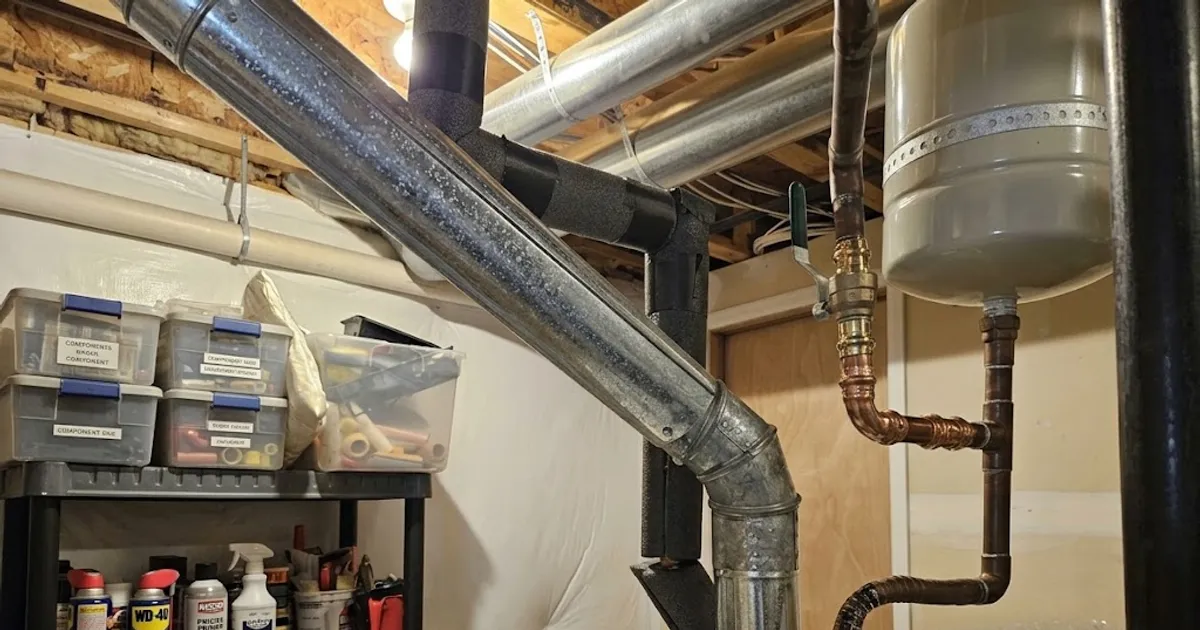
Check the damper handles in the basement. Many older duct systems have a small lever on each branch duct. If a lever sits across the duct, that branch is partly closed. Open the branches to the cold rooms and close the ones to the warmest rooms a little, then give it a day.
Run the fan continuously. Setting the thermostat fan to ON instead of AUTO keeps air moving between floors and can even out the difference. It uses more electricity, so try it and see whether it helps enough to be worth it.
Fixes That Work in Older Homes
Seal and Insulate the Ducts
According to ENERGY STAR, about 20 to 30 percent of the air moving through the ducts in a typical house is lost to leaks, holes, and loose connections. In an older house with ducts added over the decades, that loss comes straight out of the rooms at the far end. Sealing the joints and insulating ducts that run through unheated spaces puts that air back where you paid for it to go.
Add a Return Upstairs
If the upper floor has no return vent, adding one often makes the biggest single difference. Warm air can only flow into a room as fast as air can leave it.
Balance the System
A technician can measure the airflow at each register and set the dampers so each room gets its share. It is a one-time adjustment, and it is often all a house needs once the ducts are sealed.
Zone It or Add a Mini-Split
For a floor that never keeps up, zoning lets separate thermostats control separate areas, and a ductless mini-split heats a third floor or an addition directly without new ductwork through old walls. It cools the same room in summer, which fixes the other half of the problem. If your house also runs hot upstairs in July, our post on uneven cooling covers that side.
If Your Home Has Radiators
Many older Cincinnati homes still heat with a boiler. A radiator that is cold at the top usually has trapped air and needs bleeding. If several are cold, the cause is more often low system pressure, a stuck valve, or a weak circulator pump. Our boiler service page covers what we check.
Don’t Start With a Bigger Furnace
A bigger furnace is the fix people ask about most, and it is usually the wrong one. If 20 to 30 percent of your duct air is leaking out before it reaches the far rooms, a larger furnace pushes more air into the same leaks, and an oversized one short-cycles, wearing out faster and heating no more evenly. Fix the ducts, returns, and balance first. Replace the furnace when it is old or failing, and size the new one to the house.
When to Call an Insulation Contractor Instead
If your ducts are sealed, the airflow checks out, and the upstairs is still cold, the problem is probably the house, not the heating. ENERGY STAR estimates that air sealing and adding insulation in attics, floors over crawlspaces, and basements saves an average of 15 percent on heating and cooling costs. That is work for an insulation contractor, not us, and we will tell you so if that is what we find.
Get Even Heat in Your Cincinnati Home
Degree of Comfort finds and fixes uneven heating in older homes across Cincinnati and the surrounding Tri-State, including Northern Kentucky and Southeast Indiana. We check airflow, ducts, and the equipment before recommending anything, with upfront, flat-rate pricing. We are family-owned, licensed and insured.
Tired of the cold room? Call (513) 586-5107 or request an estimate and we will find out where your heat is going.
Frequently Asked Questions
Let Degree of Comfort Handle It
Our licensed technicians serve Cincinnati and surrounding areas. Same-day service available.
Call (513) 586-5107