
Key Takeaways
- An AC that turns off too quickly is short cycling — it starts, runs a few minutes, shuts off, and repeats without finishing a full cooling cycle.
- The usual suspects are simple: a clogged air filter, a thermostat issue, low refrigerant, or a unit that’s oversized for the house.
- It’s hard on the equipment — short cycling drives up energy bills, leaves your home humid, and wears out the compressor early.
- Start with the filter, then call a pro if it keeps happening — and an estimate gets you a real diagnosis.
Your air conditioner is short cycling. That’s the term for a system that turns on, runs for only a few minutes, shuts off, and then kicks back on again a short time later — over and over, without ever completing a full cooling cycle. A healthy AC runs in longer, steadier stretches. When it stops and starts constantly, something is cutting the cycle short, and it’s usually one of a handful of causes.
Some of those causes you can check yourself in five minutes. Others need a technician and a set of gauges. Here’s how to tell them apart.
Common Causes of Short Cycling
Most short cycling traces back to airflow, refrigerant, sizing, or a dirty filter. These four cover the majority of the calls we run.
A Dirty or Frozen Evaporator Coil
The evaporator coil is the part that pulls heat out of your indoor air so the blower can send cool air back around the house. When the coil gets coated in dust and grime, the system has to work harder, and condensation on the coil can freeze into a layer of ice. A frozen or overworked coil makes the AC overheat and shut itself off before it finishes cooling. If you spot ice on the indoor unit or the copper lines, shut the system off and let it thaw before you call anyone.
Low Refrigerant or a Leak
Low refrigerant is one of the most common reasons a coil freezes and the system short cycles. Refrigerant runs in a sealed loop, so if the level is low, you have a leak — it doesn’t get "used up." A hissing or bubbling sound near the unit and muggy air inside are two signs. This one isn’t DIY. Handling refrigerant requires EPA certification, so it’s a job for a licensed technician who can find the leak, fix it, and recharge the system.
An Oversized Air Conditioner
A unit that’s too big for your home cools the space so fast that it hits the target temperature and shuts off almost immediately — then the temperature creeps back up and it fires again. It feels efficient, but it’s the opposite. The system never runs long enough to pull humidity out of the air or cool evenly, and the constant stop-start wears out parts. Oversizing usually comes from a system that was sized by rule of thumb instead of a real load calculation. If short cycling started the day a new unit went in, sizing is a prime suspect.
A Clogged Air Filter
An old, clogged filter chokes off the air moving through your system. Starved of airflow, the evaporator coil can freeze, which trips the same overheating shutdown as a dirty coil. This is the one thing on the list worth checking before you call anybody. Pull the filter and hold it up to the light — if you can’t see through it, replace it. A fresh filter costs a few dollars and fixes a surprising number of short cycling complaints.
Additional Reasons for Short Cycling
If the filter is clean and the coil isn’t iced up, the problem is usually electrical or drainage-related.
Electrical and Thermostat Problems
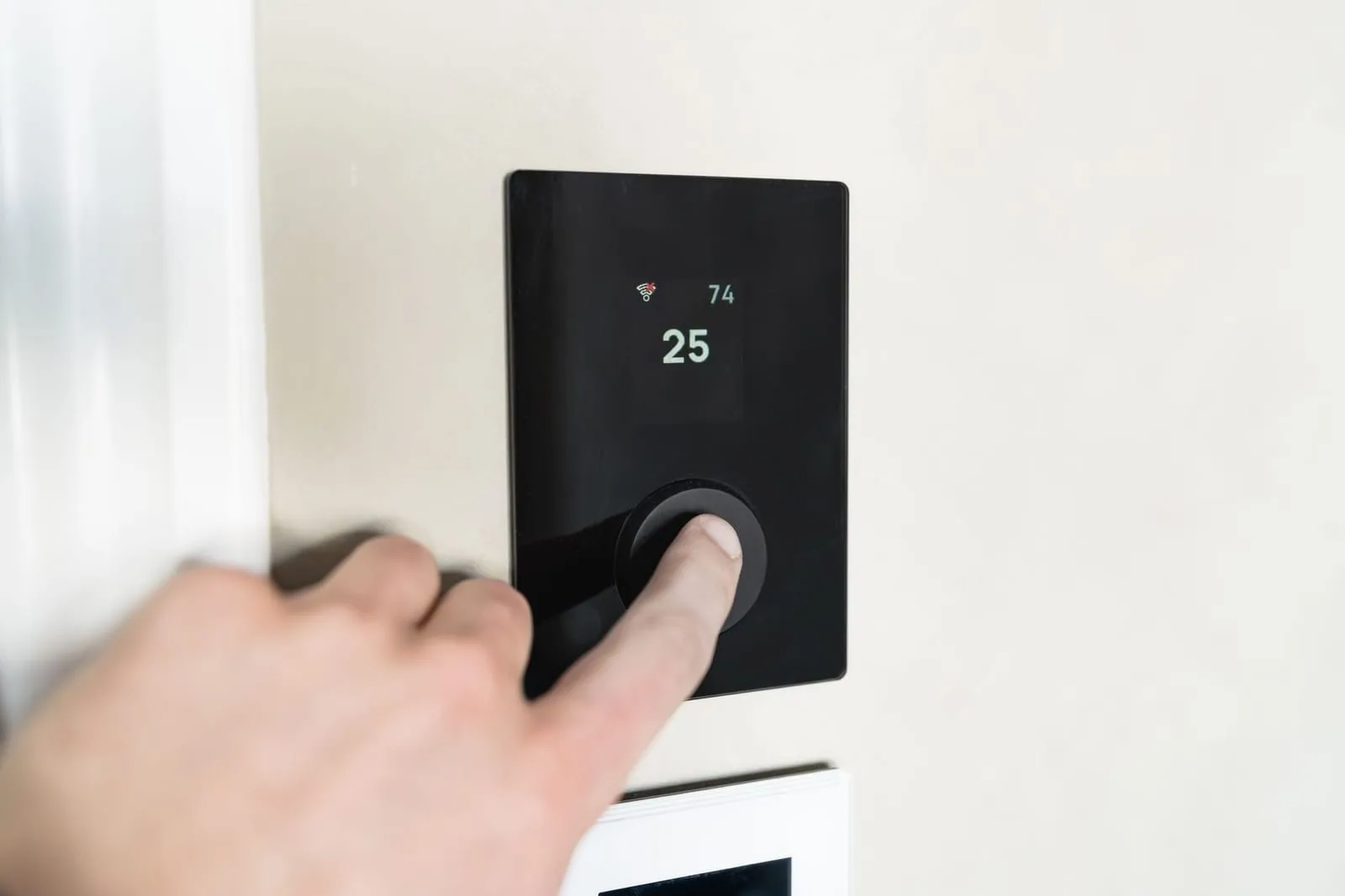
Loose or corroded electrical connections can’t reliably pass signals between the thermostat, the control board, and the rest of the system. When that communication drops, the AC shuts off unexpectedly. The thermostat itself is another common culprit — bad wiring, a dead battery, or a thermostat mounted in a hot spot like direct sun or near a supply vent will read the wrong temperature and cut cycles short. See our guide on when your AC won’t turn on at all for the electrical basics worth ruling out first.
A Clogged Drain Line
Your AC produces condensation, which collects in a drain pan and runs out through a drain line. Many systems have a safety switch that shuts the unit off when that line clogs and the pan fills, to keep water from overflowing onto your floor or ceiling. If the drain backs up, the switch can trip repeatedly, which shows up as short cycling.
A Faulty Run Capacitor
The run capacitor gives the motors the steady jolt of power they need to keep running. When it fails, the system gets power in irregular bursts, so it kicks on and off at random. A failing capacitor is a common, relatively inexpensive fix — but it takes a technician to test and replace safely.
Why Short Cycling Is Worth Fixing Fast
Short cycling isn’t just annoying. It costs you three ways.
First, humidity. An oversized or short-cycling system never runs long enough to wring moisture out of the air, so your home feels muggy and sticky even when the thermostat says it’s cool — the same problem behind uneven cooling from room to room. That damp air also invites mold.
Second, energy. An AC draws the most power in the moment it starts up. A system that starts every few minutes burns far more electricity than one that runs in long, steady cycles, so your bill climbs while your comfort drops.
Third, wear. All that stopping and starting is brutal on the compressor, the most expensive part in the whole system. With regular maintenance you can typically expect 10 to 15 years out of an air conditioner, sometimes 20. Left alone, short cycling can cut that short and turn into a costly emergency repair. If your unit is also blowing warm air, that’s another sign the system needs attention now, not later.
How to Prevent and Fix Short Cycling
Two things prevent most short cycling: a properly sized system and regular maintenance. Sizing has to account for your home’s square footage, insulation, layout, how many people live there, and the local climate — which is why it takes a real load calculation, not a guess. Once the system is in, a yearly tune-up keeps the coil clean, the refrigerant charged, and the small problems from turning into big ones.
Here’s the honest version: if the fix is a new filter or a thawed coil, handle it yourself and save the service call. But if you’ve swapped the filter and the AC is still cycling every few minutes, stop guessing. Refrigerant, capacitors, and electrical faults need a licensed technician and the right tools, and running a struggling system only adds wear. That’s the point to get a professional on it.
Get Your AC Diagnosed by Degree of Comfort
Degree of Comfort diagnoses and repairs short cycling across Cincinnati and the surrounding Tri-State, including Northern Kentucky and Southeast Indiana. We find the actual cause — filter, coil, refrigerant, thermostat, or sizing — and fix it right the first time. We’re family-owned, licensed and insured, with upfront, flat-rate pricing and a satisfaction guarantee.
If your AC keeps turning off, call (513) 586-5107, learn more about our AC repair service, or request an estimate and we’ll get your home comfortable again.
Frequently Asked Questions
Let Degree of Comfort Handle It
Our licensed technicians serve Cincinnati and surrounding areas. Same-day service available.
Call (513) 586-5107