Key Takeaways
- Start with five checks: thermostat, power switch and breaker, the blower door, the filter, and the gas valve. They are the most common simple causes, and you can check all five yourself.
- Your Carrier furnace tells you what is wrong. Count the flashes on the status light through the window in the lower door and match them to the chart on the door.
- The most common codes are 13 and 33 (overheating), 31 (pressure switch), and 34 and 14 (ignition). Dirty filters, blocked vent pipes, and dirty flame sensors cause many of them.
- Check your warranty before you pay for parts. Carrier covers parts for 10 years on most furnaces registered within 90 days of installation, but not labor.
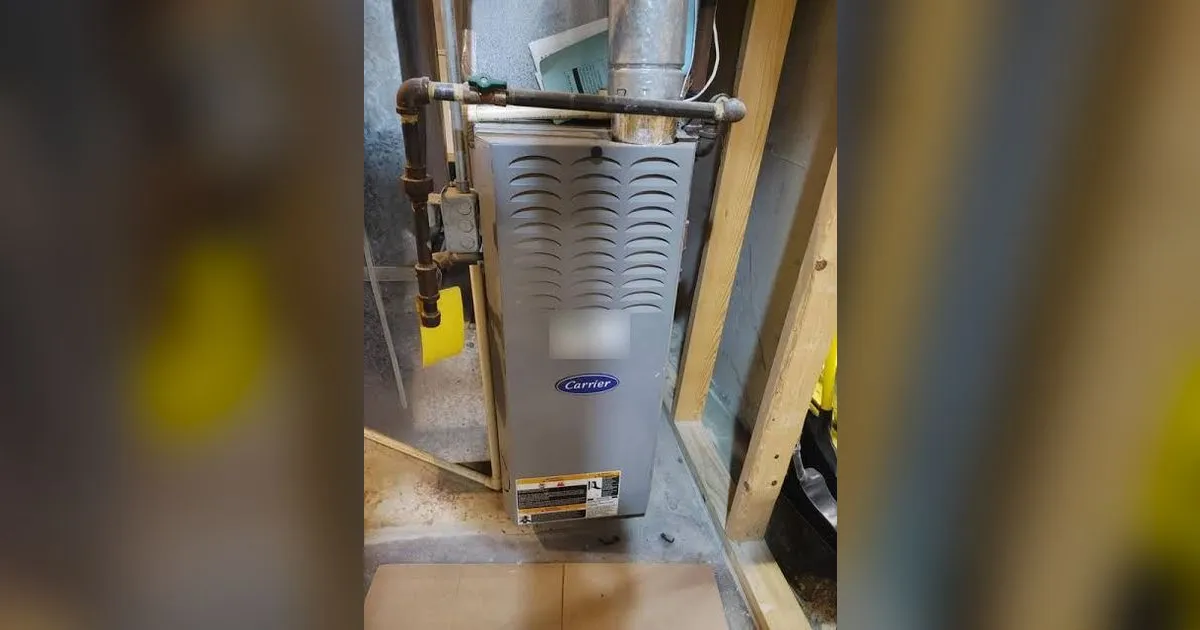
When a Carrier furnace stops working, the cause is usually one of a handful of things: the thermostat isn’t calling for heat, the furnace has lost power, the blower door isn’t closed tight, the filter is clogged, or a safety switch has shut the furnace down. Most Carrier gas furnaces also have a status light on the control board that flashes a code, so you can see what the furnace thinks is wrong before you call anyone. Start with the five checks below, then read the code. That order often finds the problem without a service visit, and it tells you what to say if you do need one.
Start Here: Five Checks Before You Call
1. The thermostat. Make sure it is set to heat, set a few degrees above the room temperature, and has working batteries if it uses them. A blank screen usually means dead batteries or a tripped breaker.
2. Power. Check the light-switch style power switch on or near the furnace, which often gets bumped off, and the furnace breaker in your electrical panel.
3. The blower door. Carrier furnaces have a safety switch that cuts power when the lower door is off. If the door was removed to change the filter and isn’t seated firmly, the furnace won’t run.
4. The filter. A clogged filter makes the furnace overheat and shut itself down. Many Carrier systems use a thick media filter in a cabinet beside the furnace; it lasts longer than a 1-inch filter, but it still needs changing. See our guide to how often to change your furnace filter.
5. The gas. Make sure the gas valve on the pipe going into the furnace is open, with the handle in line with the pipe, and that other gas appliances are working. If you smell gas, leave the house and call your gas company from outside.
How to Read Your Carrier Furnace’s Status Light
Most Carrier gas furnaces have an amber or green LED on the control board, visible through a small window in the lower door. Don’t take the door off to look: that cuts power and can clear the code. Watch through the window instead.
On many Carrier models, the code is two digits flashed as short and long blinks, with a pause before it repeats. The short flashes are the first digit and the long flashes are the second. So one short flash followed by three long flashes is code 13. A steady light usually means normal operation, and no light at all usually means no power. Codes differ between model families, so always confirm against the chart printed on the inside of your furnace door. Newer communicating Carrier Infinity furnaces also show the fault on the Infinity thermostat.
Common Carrier Furnace Codes and What They Mean
Codes 13 and 33: Limit Circuit
Code 33 means the high-limit switch or a flame rollout switch has opened. The high limit trips when the furnace overheats, which almost always comes from poor airflow: a dirty filter, closed or blocked vents, or a dirty blower. If it keeps happening, the furnace locks out and shows code 13. Change the filter and open the vents first. Some homeowners see this right after switching to a very restrictive high-MERV filter. A tripped rollout switch is different: it means flame came out of the burner area where it shouldn’t, and that needs a technician, not a reset.
Codes 31, 32, and 23: Pressure Switch
Before it lights, a high-efficiency furnace runs a small inducer fan to clear the vent, and a pressure switch confirms the vent is clear. Code 31 or 32 means the switch didn’t close. The usual causes are a blocked intake or exhaust pipe outside, a clogged condensate drain or trap, or a cracked or water-filled pressure switch hose. Code 23 is the opposite problem: the switch didn’t open when it should have. Check the white PVC pipes outside for snow, ice, leaves, or nests first.
Codes 34 and 14: Ignition
Code 34 is an ignition proving failure: the control board didn’t sense a flame after trying to light. The most common cause is a dirty flame sensor, a thin rod in the burner flame that gets coated over time. A worn hot surface igniter, low gas pressure, or a closed gas valve can cause it too. After several failed tries, the furnace shows code 14, ignition lockout, and stops trying for a while. Cleaning the flame sensor is a quick fix during a service visit. If you see the burners light and go out within a few seconds, this is likely your code. Our guide to furnace short cycling covers that pattern in more detail.
Code 24 and a Rapidly Flashing Light
Code 24 usually means the small 3-amp fuse on the control board has blown, which points to a short in the low-voltage wiring, often at the thermostat or the outdoor unit. Replacing the fuse without finding the short just blows the new one. A light that flashes rapidly, faster than a normal code, often means the line voltage polarity is reversed or the furnace isn’t properly grounded. Both are jobs for a technician.
Code 45: Control Board
Code 45 points to a control board fault. Turn the power off at the furnace switch for a minute and back on. If the code returns, the board likely needs replacing, and that part may be covered by your warranty.
Carrier Furnace Problems That Show Up in Cincinnati Winters
A few problems come up more here than the codes alone suggest. After a winter storm, snow and ice can block the side-wall vent pipes that many high-efficiency furnaces in the Cincinnati area use, which shows up as a pressure switch code. A furnace in an unheated garage, attic, or crawl space can have its condensate line freeze on the coldest nights, with the same result. And the first time the furnace runs each fall, a burning dust smell for a few minutes is normal. If it lasts, or smells like electrical burning, shut the furnace off and call.
Timing matters too. January is Cincinnati’s coldest month, with an average low of 23.1°F, and it is when furnaces run hardest and parts that were already weak finally fail. A fall tune-up catches most of those parts first.
Carrier Furnace Running but Blowing Cold Air
If the blower runs but the air is cold, first check that the thermostat fan is set to auto, not on. On "on," the blower runs constantly, including between heating cycles, and the air feels cool. If the fan setting is right, the burners probably aren’t lighting, which takes you back to the ignition and pressure switch codes above. Our post on why a furnace blows cold air covers the other causes.
Is Your Carrier Furnace Still Under Warranty?
Check before you pay for a part. Carrier’s standard limited warranty covers parts for 10 years on most furnaces when the product is registered within 90 days of installation, and 5 years if it wasn’t. Heat exchanger coverage is longer and depends on the model and whether you are the original owner. The warranty covers the part, not the labor to install it. The model and serial number are on the rating plate inside the furnace door, and you can look up your coverage on Carrier’s site. Bring that information to the service call, and ask the technician to confirm whether the failed part is covered.
Repair or Replace a Carrier Furnace in Cincinnati?
Most Carrier furnace problems are a part, not a new furnace: a flame sensor, an igniter, a pressure switch, a control board, or an inducer motor. Our view: if the furnace is under 15 years old and the heat exchanger is sound, repair it. Gas furnaces typically last 15 to 20 years. If yours is in that range, the heat exchanger is cracked, or the repair bills are stacking up, it is worth pricing a replacement. Our guide to whether to repair or replace your furnace walks through the math.
When You Don’t Need a Cincinnati Furnace Technician
If the fix was a thermostat battery, a power switch, a loose blower door, a new filter, or clearing snow off the vent pipes, you’re done, and you don’t need to pay for a visit. The same goes for a code that cleared after one power reset and hasn’t come back in a day of normal running. Call when a code keeps returning, when the furnace locks out, when you see a rollout, fuse, or board code, or any time you smell gas. For general troubleshooting beyond Carrier-specific codes, see our furnace troubleshooting tips.
Carrier Furnace Repair in Cincinnati
Degree of Comfort repairs Carrier furnaces across Cincinnati and the surrounding Tri-State, including Northern Kentucky and Southeast Indiana. We read the code, find the cause, tell you whether the part is likely under warranty, and give you the price before we start. We are an independent, family-owned company, not affiliated with Carrier, licensed and insured, with upfront, flat-rate pricing and 24/7 no-heat service. See our furnace repair page for more.
Call (513) 586-5107 or request an estimate.
Frequently Asked Questions
Let Degree of Comfort Handle It
Our licensed technicians serve Cincinnati and surrounding areas. Same-day service available.
Call (513) 586-5107