

Key Takeaways
- A leak usually comes from one of six places — the drain valve, the T&P valve, the inlet or outlet connections, the anode rod, high water pressure, or the tank itself.
- Some causes are a simple fix — a loose valve or fitting — while a corroded tank means it is time to replace the unit.
- Do not keep using a leaking water heater — shut off the power and the water and address it before it floods or fails completely.
- Most leaks are preventable with regular water heater maintenance that catches corrosion and worn parts early.
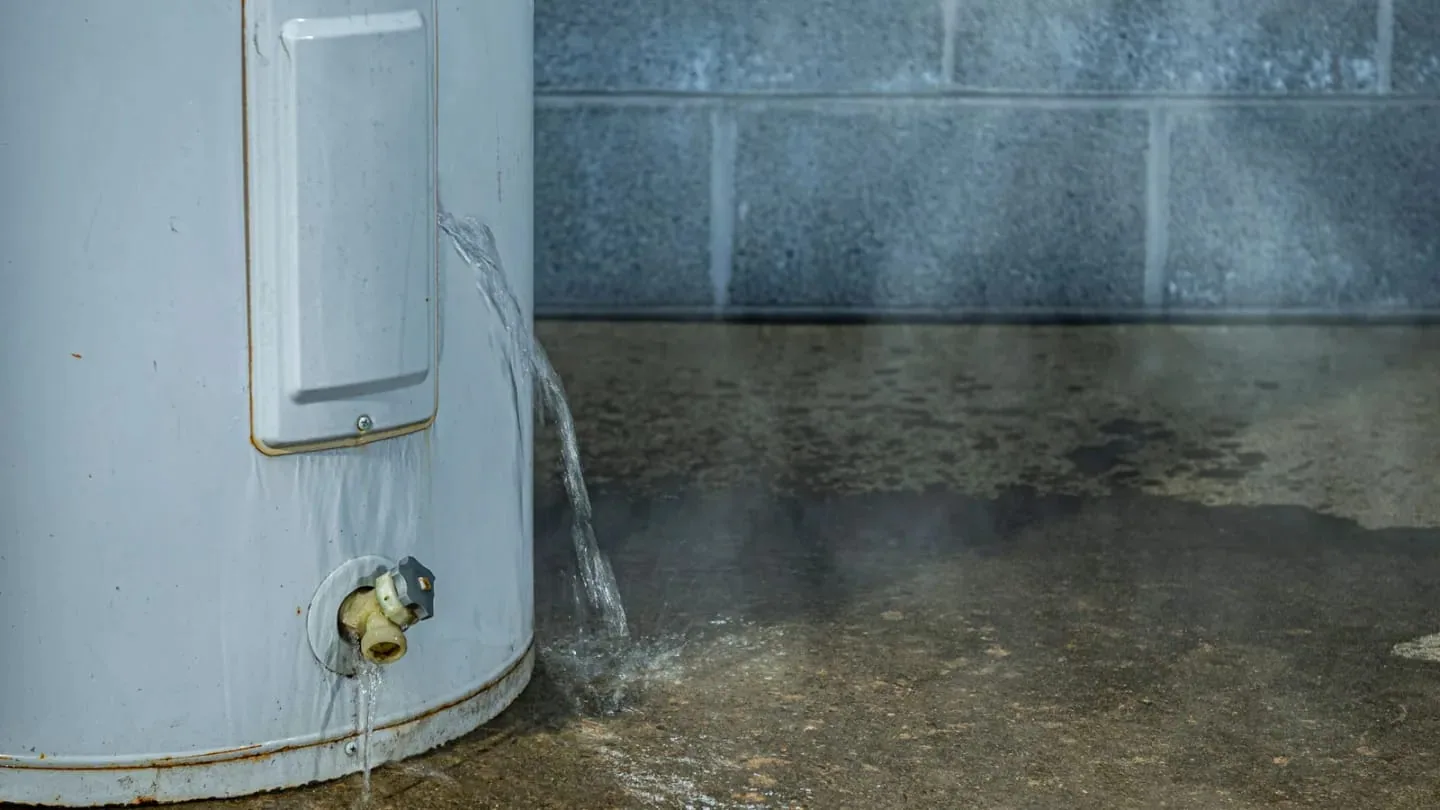
A puddle under your water heater is never a good sign, but it does not always mean disaster. A leak almost always traces back to one of six specific causes — and while a couple of them are a quick, inexpensive fix, others mean the tank is on its way out.
Here is what makes a water heater leak, how to figure out which one you are dealing with, what to do right now, and how to keep it from happening again.
Common Reasons for a Leaky Water Heater
Before anything else, find where the water is actually coming from — the source tells you how serious it is. Here are the usual culprits, from the easiest to the most serious.
A Loose Drain Valve
The drain valve at the bottom of the tank is used to flush the unit, and it can loosen over time and weep water. If the leak is here, tightening it often solves it. If it still drips once it is snug, the valve itself needs replacing — a straightforward repair.
A Faulty Temperature and Pressure (T&P) Valve
The T&P valve is a safety device that releases water when temperature or pressure climbs too high. Water near this valve can mean it is simply doing its job because of a deeper pressure problem, or that the valve has failed. Either way it is not one to ignore, since it protects the whole tank from a dangerous buildup.
Corrosion or Cracks in the Tank
This is the serious one. If water is leaking from the body of the tank itself, internal corrosion has eaten through the steel, and there is no patching it. A tank leaking from the inside needs to be replaced — which is why catching corrosion early through maintenance matters so much.
A Worn-Out Anode Rod
The anode rod is a sacrificial part that corrodes on purpose so the tank does not. Once it is used up, rust starts attacking the tank instead, which leads to leaks. Replacing the anode rod on schedule is one of the cheapest ways to extend a water heater’s life and prevent tank failure.
Loose Inlet or Outlet Connections
The cold-water inlet and hot-water outlet pipes connect at the top of the tank, and those fittings can loosen with years of heating and cooling. A leak up top is often just a connection that needs tightening or a worn fitting that needs to be resealed.
Too Much Water Pressure
High household water pressure stresses the whole system, including the water heater, and can force water out through the T&P valve or weak points. If pressure is the root cause, the fix is in the plumbing, not just the heater — a good reason to have a plumber check it.
Can I Keep Using a Leaking Water Heater?
No — and it is worth being clear about that. Running a leaking water heater risks more water damage, mold growth in the surrounding area, and, if the tank is failing, a complete rupture that empties dozens of gallons onto your floor at once. Even a slow drip gets worse, not better. The safe move is to shut it down and have it looked at before it turns into a much bigger and more expensive problem.
What to Do If Your Water Heater Is Leaking
If you find water around your heater, take these steps in order before help arrives.
1. Turn Off the Power or Gas
For an electric unit, switch off the breaker that feeds it. For a gas unit, turn the gas control valve to the off position. This keeps the heater from running dry and creating a bigger hazard.
2. Shut Off the Water Supply
Close the cold-water shutoff valve at the top of the heater to stop more water from feeding the tank. If you cannot reach or turn it, shut off the main water supply to the house.
3. Clean Up the Standing Water
Mop or towel up any pooled water to limit damage to floors and to prevent mold from taking hold. Move anything nearby that water could ruin.
4. Call a Professional
Get a licensed plumber out to diagnose the source and handle the repair or replacement. If the leak is heavy or the tank has ruptured, that is an emergency plumbing call — do not wait.
How to Prevent Future Leaks
Most leaks build up quietly over months or years, which means most are preventable. An annual tank flush clears the sediment that accelerates corrosion, and a periodic anode rod check catches the wear that leads to tank failure. Keeping up with water heater maintenance is the difference between a planned part swap and a flooded basement. For more on that, see our guides to water heater maintenance in winter and preparing your water heater for winter.
Signs It Is Time to Replace the Water Heater
Sometimes a repair is not the answer. Lean toward replacement if the unit is 10 to 15 years old, if it leaks repeatedly or you see rusty water, if you run out of hot water far faster than you used to, or if the temperature swings no matter what you set it to. At that point, a new tank or a tankless upgrade usually costs less in the long run than chasing one repair after another.
Got a Leak? Call Degree of Comfort
A leaking water heater is one of those problems that only gets more expensive the longer it waits. Degree of Comfort can track down the source, fix what is fixable, and replace the unit when that is the smarter call. We serve homeowners across Cincinnati and the surrounding Tri-State, including Northern Kentucky and Southeast Indiana, and we are family-owned, licensed and insured, with upfront, flat-rate pricing and a satisfaction guarantee.
Water where it should not be? Call (513) 586-5107, ask about water heater repair, or request an estimate and let our team handle it.
Frequently Asked Questions
Let Degree of Comfort Handle It
Our licensed technicians serve Cincinnati and surrounding areas. Same-day service available.
Call (513) 586-5107