

Key Takeaways
- Winter air is dry because cold air holds less moisture, and your heating system dries it out further once it warms up.
- The fix is putting humidity back — a humidifier is the most reliable way, backed up by simple habits and sealing leaks.
- A whole-home humidifier on your HVAC treats every room at once and is the lasting solution for a persistently dry house.
- Dry air is a comfort and a health issue — it irritates skin, sinuses, and throats, so it is worth addressing with proper indoor air quality help.
If every winter brings chapped lips, itchy skin, a scratchy throat, and a static shock every time you touch a doorknob, your indoor air is too dry. It is one of the most common complaints we hear once the heat comes on, and the good news is that it is very fixable.
Here is why indoor air turns so dry in winter, what it does to your comfort and health, and seven practical ways to put the moisture back — from quick habits to a permanent whole-home fix.
Why Winter Air Feels So Dry
It comes down to simple physics. Cold air cannot hold much moisture, so the air outside in winter is already dry. When that air comes into your home and your furnace or heat pump warms it up, the relative humidity drops even lower. Warm air can hold a lot of moisture, but there is little there to fill it — so the air pulls moisture from wherever it can, including your skin, your lips, and the wood in your home.
Indoor humidity is most comfortable somewhere around 30 to 50 percent. In a heated home in the dead of winter, it can drop well below that, which is when the symptoms start to show up.
Signs Your Indoor Air Is Too Dry
Dry air announces itself in a handful of familiar ways. Watch for dry, itchy, or flaky skin, chapped or cracked lips, a scratchy throat and irritated sinuses, frequent static electricity, and more nosebleeds than usual. Beyond your body, you may notice wood floors, trim, and furniture developing small cracks or gaps as they dry out, and houseplants struggling. Any of these on its own is easy to brush off; together, they point clearly to low humidity.
How to Cope With Dry Indoor Air During Winter
You do not have to live with it. These seven approaches run from quick fixes you can do today to the permanent solution, and they work well in combination.
1. Add Moisture With a Humidifier
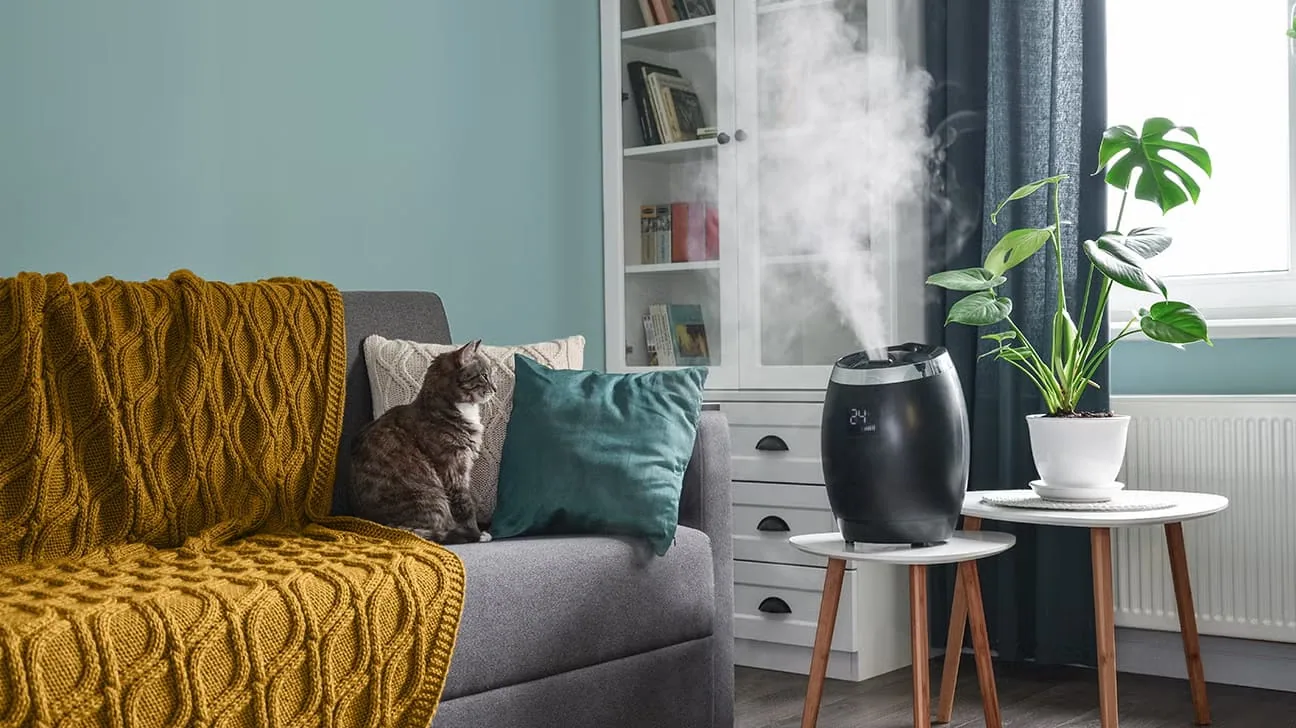
A humidifier is the most direct fix. A portable unit can take the edge off a bedroom or living room, but for a dry house the better answer is a whole-home humidifier installed on your HVAC system. It adds moisture to the air as it circulates, so every room benefits and you are not refilling tanks all winter. Our indoor air quality team can size and install one to match your home.
2. Take Advantage of Steam
Everyday activities put moisture in the air for free. Leave the bathroom door open during and after a hot shower, let a pot of water simmer on the stove, and air-dry laundry on a rack indoors. None of these replaces a humidifier, but they help take the edge off in a pinch.
3. Bring in Houseplants
Plants release moisture into the air through a process called transpiration, gently raising the humidity around them. Areca palms, peace lilies, and spider plants are good choices. They will not transform a whole house on their own, but they help and they clean up the air a little while they are at it.
4. Seal Air Leaks
Every draft around a window, door, or outlet lets dry outdoor air in and pushes humidified air out. Weatherstripping doors, caulking gaps, and sealing obvious leaks helps your home hold onto the moisture you add, and it lowers your heating bill at the same time.
5. Adjust Your Heating System
Running the heat hotter than you need dries the air out faster, so a slightly lower, steady thermostat setting helps. A system that is overdue for service can also run inefficiently and worsen the problem, so keeping up with furnace maintenance is part of the picture. If your dry air comes with other comfort issues, it may be worth having your whole heating setup looked at.
6. Build in Moisture-Friendly Habits
Small routines add up. Keep bowls of water near heat sources or on windowsills so they evaporate slowly, run a humidifier overnight in the bedroom, and avoid running exhaust fans longer than you need to, since they pull humid air straight outside.
7. Hydrate and Protect Your Skin
This one treats the symptoms rather than the air, but it matters. Drink plenty of water, use a good moisturizer and lip balm, and apply a thicker cream at night. It will not raise the humidity in your home, but it keeps the dryness from taking such a toll while you address the root cause.
Why Indoor Air Quality Matters
Dry air is more than a comfort issue. Persistently low humidity irritates skin, eyes, throats, and nasal passages, and it can make asthma and allergy symptoms worse. Dry nasal passages are also less able to trap viruses, which is part of why colds spread more easily in winter. On the house side, prolonged dryness cracks wood floors, trim, and furniture and can damage instruments and artwork. Getting humidity into a healthy range protects both your family and your home, which is the larger point of managing your indoor air quality.
When to Call a Professional
Habits and a portable humidifier go a long way, but if the dryness sticks around no matter what you try, or it is affecting your whole house and your health, it is worth bringing in a pro. A whole-home humidifier integrated with your HVAC is the lasting fix, and it has to be sized and installed correctly to work right and to avoid adding too much moisture. That is the part to leave to a licensed team.
Fix Dry Air for Good With Degree of Comfort
If you are tired of fighting dry air every winter, Degree of Comfort can assess your home’s humidity and put the right solution in place, from a whole-home humidifier to a heating system tune-up. We serve homeowners across Cincinnati and the surrounding Tri-State, including Northern Kentucky and Southeast Indiana, and we are family-owned, licensed and insured, with upfront, flat-rate pricing and a satisfaction guarantee.
Ready to breathe easier this winter? Call (513) 586-5107, ask about indoor air quality and whole-home humidifiers, or request an estimate and let our team handle it.
Frequently Asked Questions
Let Degree of Comfort Handle It
Our licensed technicians serve Cincinnati and surrounding areas. Same-day service available.
Call (513) 586-5107