

Key Takeaways
- Most tankless installs land between about $1,400 and $5,600, according to HomeGuide’s 2026 figures. Electric runs $1,400 to $3,000 installed, and gas $2,100 to $5,600.
- Switching from a tank costs more than replacing a tankless. A bigger gas line, new venting, a condensate drain, and an outlet are where the money goes.
- Cincinnati’s hard water adds upkeep. At 7 to 8 grains per gallon, plan on flushing the unit once a year.
- The savings are real but slow. ENERGY STAR puts it at about $95 a year for a family of four over a standard gas tank.
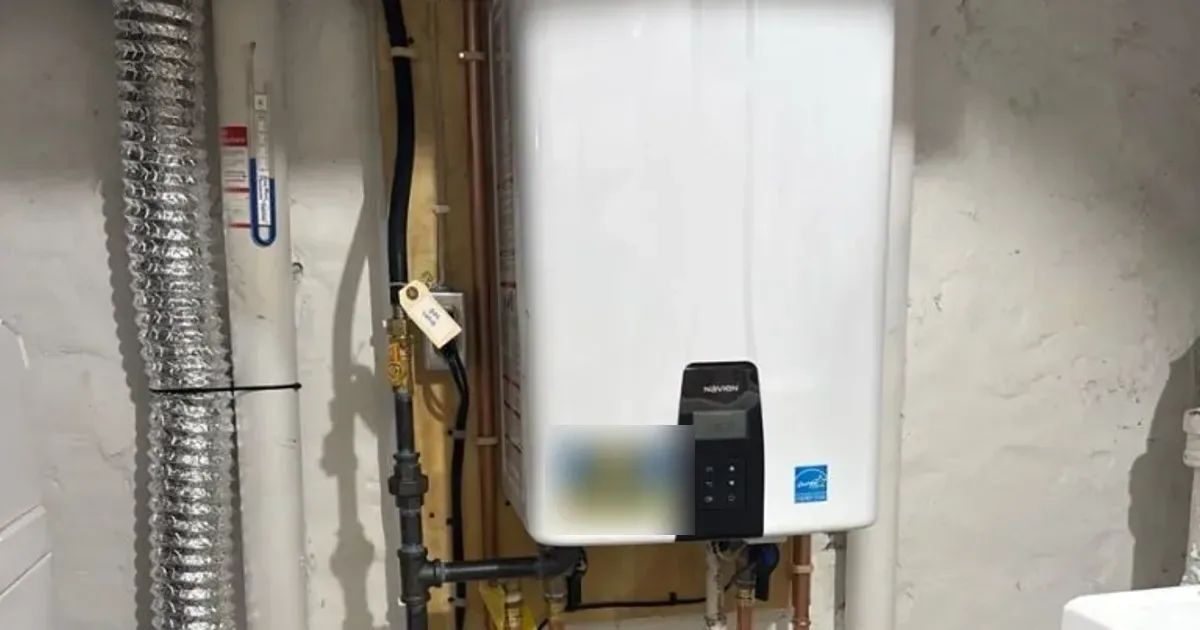
A tankless water heater in Cincinnati typically costs about $1,400 to $5,600 installed in 2026, going by HomeGuide’s national figures, and Fixr puts the average for a whole-house gas model at $2,811. Electric units sit at the low end. Gas units cost more, and the biggest jump comes when you are switching from a tank: the gas line often has to be upsized, the old chimney vent can’t be reused, and the unit needs a drain and an outlet. Those are national numbers, not a price list. Here is what moves a Cincinnati job up or down, what it costs to own, and when it pays for itself.
What a Tankless Water Heater Costs in Cincinnati in 2026
We don’t publish one price, because two tankless jobs can look nothing alike. These are the current ranges from sources that track installed costs:
| Type of job | Cost | Source |
|---|---|---|
| Tankless water heater, installed | $1,400 to $5,600 | HomeGuide, 2026 |
| Most installs | $2,500 to $4,500 | Fixr, 2026 |
| Whole-house gas unit, 150,000 BTU | $2,811 average | Fixr, 2026 |
| Gas tankless, installed | $2,100 to $5,600 | HomeGuide, 2026 |
| Electric tankless, installed | $1,400 to $3,000 | HomeGuide, 2026 |
| Larger gas line | $350 to $2,000 | HomeGuide, 2026 |
| New exhaust venting | $100 to $600 | HomeGuide, 2026 |
| Electrical panel upgrade (electric units) | $500 to $2,000 | HomeGuide, 2026 |
| Plumber labor | $75 to $130 an hour, 6 to 10 hours | Fixr, 2026 |
A gas-to-gas swap of an existing tankless unit sits at the bottom of those ranges. A first-time conversion from a 40- or 50-gallon tank, in an older Cincinnati basement where the gas line and chimney were sized decades ago, sits at the top.
Gas vs. Electric Tankless Water Heaters
Gas is the usual choice in Cincinnati homes that already have gas. It handles a whole house, including two showers at once, and it runs on Duke Energy gas rather than electricity. The extra cost is in the gas line and venting.
Electric units are cheaper to buy and install, with no venting at all. The catch is power. HomeGuide notes whole-house electric tankless units draw 100 to 200 amps, and an electrical panel upgrade adds $500 to $2,000. Many older Cincinnati homes still have 100-amp service, which can’t carry a whole-house electric unit plus everything else. Small electric units under a sink or for one bathroom are a different story and often make sense.
Our post on how a tankless water heater works covers the difference between gas and electric in more detail.
Converting From a Tank: Where Cincinnati Jobs Get Expensive
Most of the price difference between quotes comes from what has to change around the heater, not the heater itself.
The gas line. A gas tankless unit can need around 150,000 to 199,000 BTU an hour when it fires, several times what a tank water heater draws. The half-inch line that fed your tank often can’t supply that. HomeGuide puts a larger gas line at $350 to $2,000.
Venting. A gas tankless unit can’t share the old chimney the way the tank did. Condensing models vent through the side wall in PVC pipe, and non-condensing models need special stainless vent pipe. HomeGuide puts new exhaust venting at $100 to $600.
The chimney left behind. If the old water heater shared a chimney with a furnace, taking it off changes how that chimney drafts. Have it checked, and plan for a liner if the furnace is left alone in a flue sized for two.
A drain and an outlet. Condensing units make acidic water that has to go to a drain, sometimes through a neutralizer, and they need a standard outlet for their controls and fan.
Isolation valves. Service valves that let you flush the unit should be part of every install. They cost little and save a lot later.
Sizing a Tankless Unit for Cincinnati Winters
A tankless heater is sized by flow rate, in gallons per minute, at a given temperature rise. The colder the water coming in, the less hot water the same unit can make. In an Ohio January, water coming into the house can drop into the 40s. Raising that to 120 degrees takes a rise of about 75 degrees, which is much harder work than in a warm-climate state.
That is why a unit that looks big enough on a summer spec sheet can fall short in February. Size it for winter: count the fixtures you run at the same time (a showerhead uses up to 2.5 gallons a minute, or 2.0 for a WaterSense model) and check the unit’s flow at a 70 to 75 degree rise. Undersizing is the most common reason people say their tankless “runs out” or goes lukewarm.
Hard Water and Tankless Maintenance in Cincinnati
According to the Greater Cincinnati Water Works water quality report, Cincinnati water averages 126 to 140 mg per liter of hardness, about 7 to 8 grains per gallon. That is moderately hard. In a tankless unit, the minerals build up as scale inside the heat exchanger, where they cut efficiency and can trigger error codes or shut the unit down.
The fix is a yearly flush: the unit is isolated with its service valves and a descaling solution is pumped through it. Budget for it as part of owning one, along with cleaning the inlet screen. In homes with harder water or heavy use, a water softener or scale-prevention filter in front of the unit stretches the time between flushes. Our post on signs your home has hard water covers what to look for.
What a Tankless Water Heater Saves
A tankless unit saves energy by not keeping a tank of water hot around the clock. The U.S. Department of Energy says demand water heaters can be 24% to 34% more energy efficient than a standard tank in homes that use 41 gallons of hot water or less a day, and 8% to 14% more efficient in homes that use around 86 gallons a day.
In dollars, ENERGY STAR estimates a certified gas tankless unit saves a family of four about $95 a year, or $1,800 over its life, compared with a standard gas storage tank. ENERGY STAR also puts tankless life expectancy at about 20 years, against 8 to 12 for a typical tank. Our post on how long a water heater lasts covers both.
Here is our view: if your gas line has to be upsized, don’t buy a tankless heater to save money. At about $95 a year in savings, a $1,000 gas line upgrade alone takes more than ten years to pay back, before you count the unit, the venting, or the yearly flush. Buy it for endless hot water, the floor space, or the longer life. If your gas line is already big enough, the math is much better.
Tax Credits, Rebates, and Cincinnati Permits
The federal 25C credit has ended. The Energy Efficient Home Improvement Credit used to cover part of a qualifying water heater. According to the IRS, it is not allowed for property placed in service after December 31, 2025. A unit installed this year doesn’t qualify. We are plumbers, not accountants, so confirm anything tax-related with your tax preparer.
Duke Energy rebates change. Check Duke Energy’s current Ohio rebate list before you sign, and ask whether the work has to be done by a participating contractor.
Permits. The City of Cincinnati requires a permit and inspection for new and replacement plumbing installations, and gas line and venting changes are inspected too. Your contractor should pull the permit and include it in the quote. Suburbs, Northern Kentucky, and Southeast Indiana have their own building departments.
Tank vs. Tankless: Cost Over the Life of the Heater
A standard tank costs less up front, but it lasts 8 to 12 years, so over the 20-year life ENERGY STAR gives a tankless unit, you would likely buy and install two tanks. Add ENERGY STAR’s $1,800 in lifetime gas savings, and a tankless unit that didn’t need a new gas line often comes out ahead over 20 years. One that needed a gas line, venting, and a panel upgrade often doesn’t. Our post on whether switching to tankless is worth it covers the non-cost side: endless hot water, space, and the trade-offs.
When You Don’t Need a Tankless Water Heater
If your tank is under 8 years old, isn’t leaking, and gives you enough hot water, keep it. Replacing a working tank early throws away years of use for savings of about $95 a year. The same goes for a household of one or two people with modest hot water use and a gas line that would need upsizing. A new standard tank, or flushing the one you have, is the better money.
And if your only complaint is running out of hot water, a correctly sized tank, or a tank set a little hotter with a mixing valve, can fix that for less. We’ll tell you which one fits your house.
Tankless Water Heater Installation in Cincinnati
Degree of Comfort installs and services tankless water heaters and standard tank water heaters across Cincinnati and the surrounding Tri-State, including Northern Kentucky and Southeast Indiana. We check your gas line, venting, and water hardness before we quote, size the unit for winter, and give you the price before we start. We are family-owned, licensed and insured, with upfront, flat-rate pricing. If you need to spread the cost, see our financing options.
Call (513) 586-5107 or request an estimate.
Frequently Asked Questions
Let Degree of Comfort Handle It
Our licensed technicians serve Cincinnati and surrounding areas. Same-day service available.
Call (513) 586-5107