

Key Takeaways
- A working sump pump is your first line of defense — sump pump failure is the number one cause of basement floods, so test it and add a battery backup.
- Seal foundation cracks and basement windows where water seeps in, and grade the yard so it slopes away from the house.
- Move water away from the foundation — clean gutters, extend downspouts at least 3 feet out, and keep drains clear.
- Waterproof and control humidity with sealant, window well covers, and a dehumidifier to stop moisture and mold.
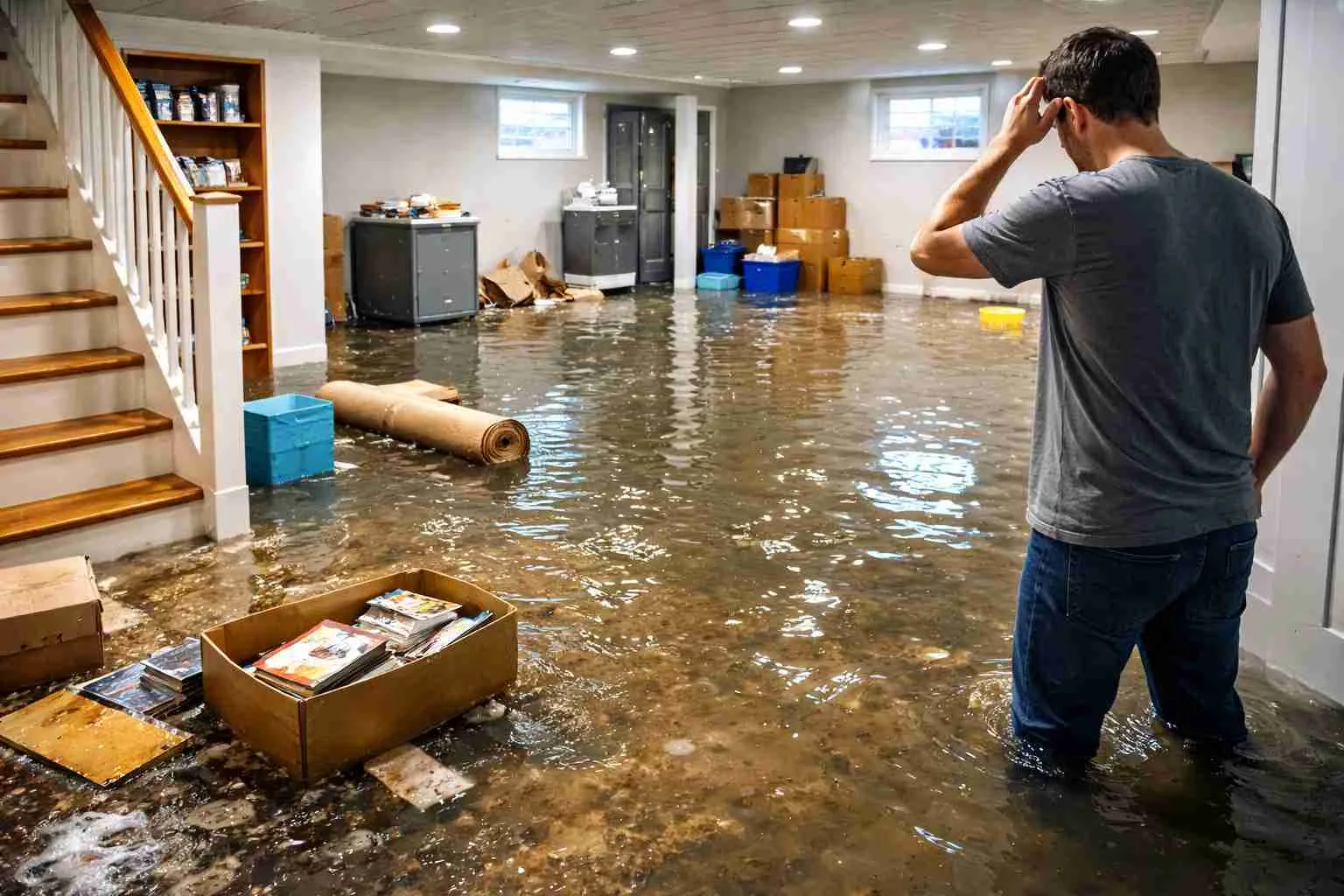
Summer is when basements flood — heavy rain, saturated ground, and storm-driven power outages all land in the same stretch of the year. Keeping yours dry comes down to four things: a reliable sump pump, a sound foundation, water managed outside the house, and proper waterproofing. Handle these before the storms arrive and you avoid the far bigger job of cleaning up after.
First, What Causes a Wet Basement?
Basement water usually comes from heavy rain overwhelming poor drainage, water seeping through cracks in the walls or floor, or a sump pump that fails right when it is needed. Storms make it worse: a power outage can knock out the sump pump at the exact moment the water table is rising. Understanding which of these applies to your home tells you where to focus.
Tip 1: Protect the Systems Inside — Starting With the Sump Pump
The sump pump is the most important piece of equipment keeping your basement dry, and sump pump failure is the number one cause of most basement floods.
Test the Pump and Add a Backup
Check the sump pit for debris that could jam the pump, then test it by pouring a bucket of water into the pit — the pump should kick on, clear the water, and shut off. Because storms cause outages, a battery-powered backup pump or a separate generator is worth the investment, so the system keeps running when the power does not. If your pump is already acting up, our guide on why your sump pump is not working covers what to check.
Add Flood Detection
Water sensors detect the presence of water and sound an alarm before a small leak becomes a flood. Place them near the washing machine, dishwasher, water heater, and low points of the basement so you get a warning early, while there is still time to act.
Tip 2: Inspect Your Foundation and Windows
Water finds the path of least resistance, and that is usually a crack. Inspect the exterior foundation, basement walls and floors, and the areas around doors and utility penetrations. Fill any cracks you find with an epoxy sealant before summer rain has a chance to work through them.
Check Windows and Landscaping
Basement windows develop air and water leaks over time — re-caulk or replace old ones, which also improves energy efficiency. Then look at how your yard is graded: the ground should slope away from the foundation, not toward it, so rain drains off instead of pooling against the house.
Tip 3: Manage Water Outside the Home
A lot of basement flooding starts with water that was never directed away from the house in the first place.
Clean Gutters and Extend Downspouts
Clogged gutters spill rain straight down against the foundation. Keep them clear, and make sure downspouts carry water at least 3 feet away from the house — add extensions if they do not. It is one of the cheapest, most effective things you can do.
Clear Your Drains and Ditches
At the start of the season, check that storm and yard drains are not blocked by mulch, leaves, and debris. A clogged drain sends water where you do not want it. For anything serious or recurring, a professional drain cleaning clears the line properly — and our guide on how to tell if your main drain is clogged helps you spot the signs.
Tip 4: Waterproof and Control Humidity
Even a dry basement benefits from a moisture barrier. Seal visible cracks in the walls and floor, and consider a waterproofing membrane or sealant on the interior surfaces. Clear acrylic window well covers keep water from collecting around basement windows while still letting light in. Finally, monitor the humidity down there and run a dehumidifier as needed — controlling moisture is what keeps mold and mildew from taking hold even when there is no outright flooding.
Keep Your Basement Dry With Degree of Comfort
Some of this is a weekend of gutter-cleaning and caulk; the sump pump and drainage side is where a professional pays off. Degree of Comfort installs and services sump pumps, clears drains, and handles plumbing across Cincinnati and the surrounding Tri-State, including Northern Kentucky and Southeast Indiana. We are family-owned, licensed and insured, with upfront, flat-rate pricing and a satisfaction guarantee.
Want your basement ready before summer storms? Call (513) 586-5107, ask about a sump pump check, or request an estimate and let our team handle it.
Frequently Asked Questions
Let Degree of Comfort Handle It
Our licensed technicians serve Cincinnati and surrounding areas. Same-day service available.
Call (513) 586-5107