

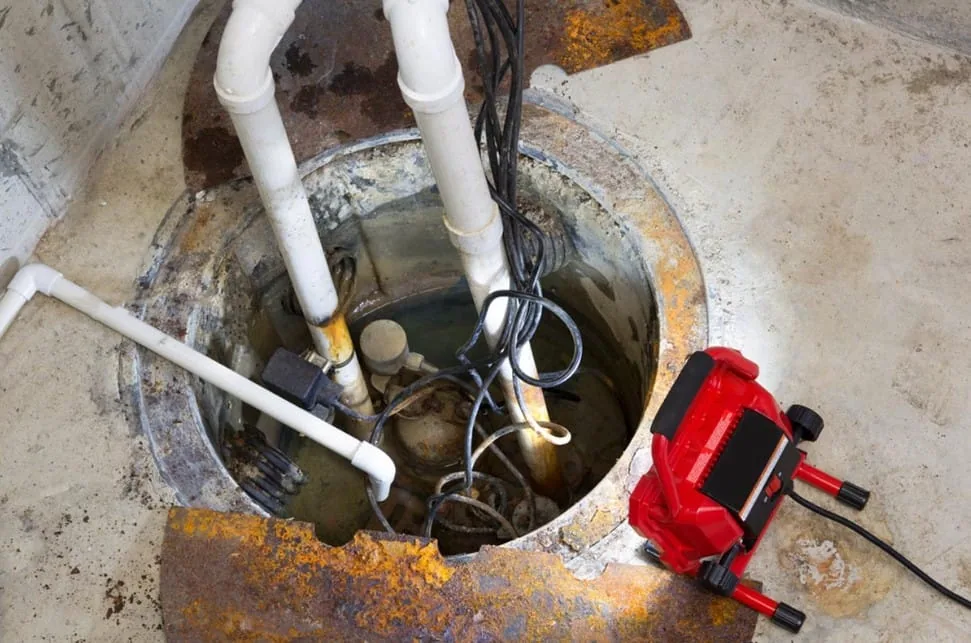
Key Takeaways
- A sump pump usually fails for one of five reasons — lost power, a stuck float switch, a clogged discharge pipe, a worn-out motor, or a pump that is simply undersized.
- A few checks you can do yourself — confirm power, free the float, and clear the discharge line — solve a lot of no-run problems.
- A battery backup is the best insurance since pumps fail most often during the storms and outages when you need them most.
- Test it regularly and service it yearly — or have a pro handle sump pump service before the next heavy rain.
A sump pump only matters on the day it is needed, and that is exactly when a failure turns into a flooded basement. The good news is that when one stops working, the cause is almost always one of five specific things — and a couple of them you can check and fix yourself in a few minutes.
Here is what makes a sump pump quit, how to troubleshoot it step by step, and how to keep it from failing when the water is rising.
Common Reasons Your Sump Pump Is Not Working
Start by narrowing down which of these you are dealing with — the symptom usually points straight to the cause.
Power Issues
The most common and most overlooked cause. The pump may be unplugged, the outlet’s GFCI may have tripped, or the breaker may have flipped. A storm that knocks out power takes the pump with it, which is exactly the scenario a backup is for. If the breaker keeps tripping, that points to an electrical problem worth a licensed electrician.
A Stuck Float Switch
The float switch is what tells the pump to turn on as water rises. If it gets jammed against the pit wall, tangled, or stuck with debris, the pump never gets the signal to run even though water is pouring in. A float stuck in the down position is one of the most frequent reasons a healthy pump sits silent.
A Clogged Discharge Pipe
The discharge pipe carries water out of the pit and away from your home. If it clogs with debris, freezes in winter, or the exterior outlet gets blocked, the pump may run but the water has nowhere to go. A frozen or buried discharge line is a common cold-weather failure.
Mechanical Failure
Like any motor, a sump pump wears out. A burned-out motor, a seized impeller, or worn internal parts will stop it cold. If the pump hums but does not pump, or does nothing at all with power confirmed, the motor or impeller is the likely culprit and usually means repair or replacement.
An Overworked or Undersized Pump
A pump too small for your home or water table runs constantly and still falls behind during heavy storms, which both floods the basement and burns the motor out early. If yours runs nonstop in every hard rain, it may simply be undersized for the job.
How to Troubleshoot a Sump Pump That Will Not Run
Work through these in order before calling for help. Most no-run problems are found in the first three.
Check the Power First
Make sure the pump is plugged in, reset the GFCI outlet, and check the breaker. Confirm the outlet itself has power by testing it with another device. This is the fix more often than people expect.
Inspect the Float Switch
Look into the pit and make sure the float moves freely and is not pinned against the side or tangled. Clear away any debris around it. Lifting the float by hand should kick the pump on — if it does, the switch was the problem.
Clear the Discharge Pipe
Check the discharge line for clogs and inspect where it exits outside for blockage or, in winter, ice. Clearing an obstruction here often gets a running-but-not-draining pump working again.
Listen for Mechanical Problems
Turn your attention to the motor. Grinding, humming without pumping, or total silence with power confirmed all point to a mechanical failure that usually needs a professional plumbing repair rather than a DIY fix.
Test It With a Bucket of Water
The simplest health check: slowly pour a bucket of water into the pit and watch. The float should rise, the pump should switch on, drain the water, and shut off. If it does all of that, your pump is working. If not, you have found a failure before a storm did.
How to Prevent Sump Pump Failure
Most sump pump failures are preventable, and prevention is far cheaper than drying out a flooded basement.
Test and Maintain It Regularly
Run the bucket test every few months and especially before the wet season. An annual professional inspection cleans the pit, checks the float and discharge, and confirms the motor is healthy.
Install a Battery Backup
This is the upgrade that matters most. Since pumps so often fail during the storms that knock out power, a battery backup keeps yours running when the grid goes down — exactly when the water is highest.
Right-Size the Pump
If your pump struggles in every heavy rain, a higher-capacity unit sized to your home and water table will keep up without running itself to death. A pro can tell you what capacity your situation actually needs.
Keep the Pit Clear of Debris
Dirt, gravel, and debris settle into the pit over time and can jam the float or clog the intake. Checking and cleaning the pit periodically keeps everything moving the way it should.
When to Call a Professional
If you have checked the power, float, and discharge and the pump still will not run — or it is grinding, burning out, or failing during every storm — it is time for a pro. A licensed plumber can diagnose a mechanical failure, size a replacement correctly, and add a battery backup. And if water is already coming in, do not wait: that is an emergency plumbing call.
Protect Your Basement With Degree of Comfort
A working sump pump is cheap insurance against an expensive flood. Degree of Comfort repairs, replaces, and maintains sump pumps, and installs battery backups so yours is ready when the rain comes. We serve homeowners across Cincinnati and the surrounding Tri-State, including Northern Kentucky and Southeast Indiana, and we are family-owned, licensed and insured, with upfront, flat-rate pricing and a satisfaction guarantee.
Want yours checked before the next storm? Call (513) 586-5107, ask about sump pump service, or request an estimate and let our team handle it.
Frequently Asked Questions
Let Degree of Comfort Handle It
Our licensed technicians serve Cincinnati and surrounding areas. Same-day service available.
Call (513) 586-5107