

Key Takeaways
- High-efficiency furnaces vent through PVC pipe out a sidewall, not up a metal flue or chimney.
- The reason is the exhaust itself: a furnace rated 90 AFUE or higher leaves cool, acidic condensation that would rot a standard vent and chimney.
- That condensation needs a drain, and the intake and exhaust pipes have to be sloped and sized correctly or the furnace shuts down.
- This is not a DIY venting job — sizing, slope, and clearances are code-driven and safety-critical, so it belongs to a licensed HVAC pro.
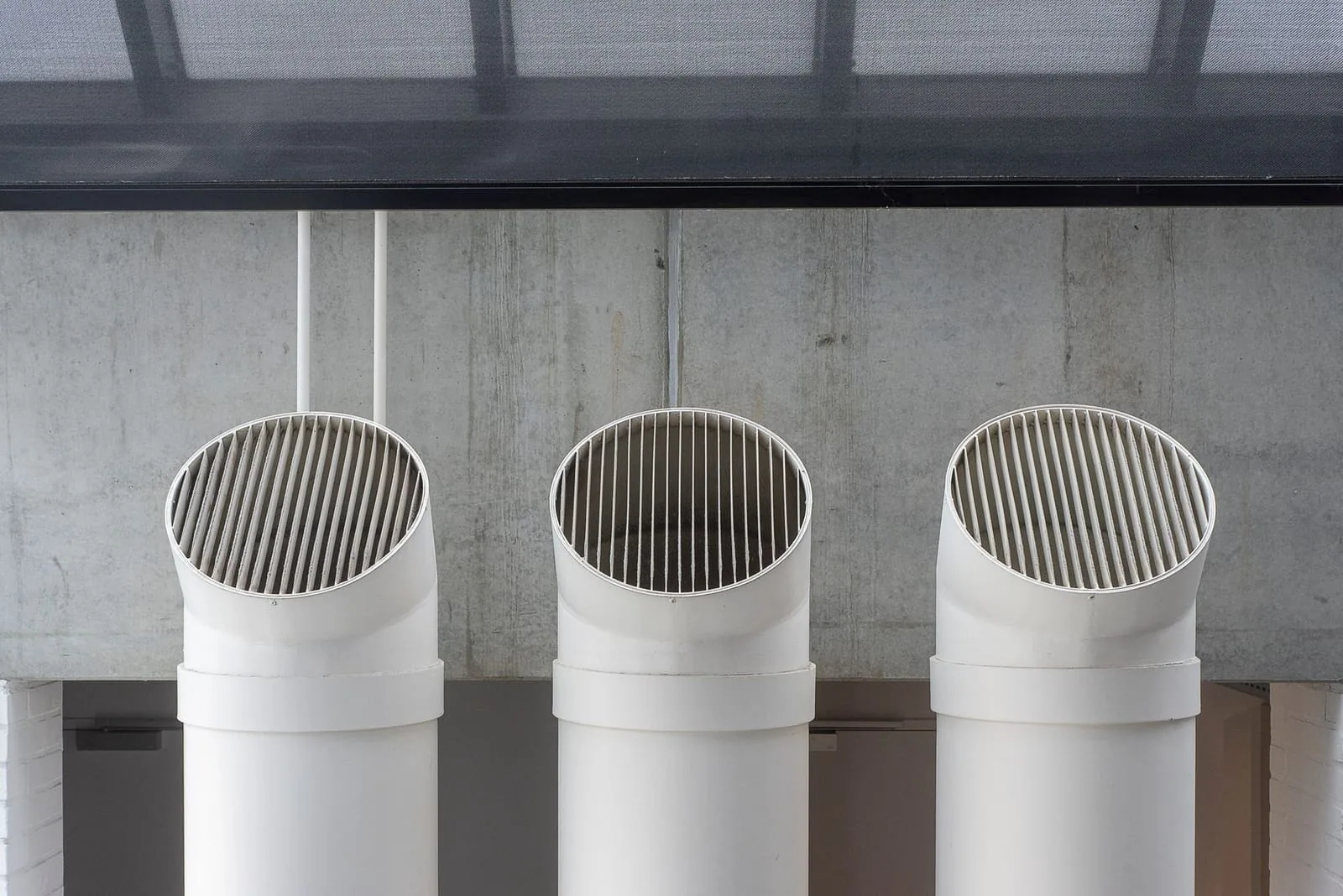
High-efficiency furnace venting is the sealed PVC piping that carries exhaust out of your home and, in many setups, pulls fresh combustion air back in. Instead of sending hot gases straight up a metal flue and out the roof, a high-efficiency furnace squeezes so much heat out of its combustion that the leftover exhaust is barely warm. That cool, wet, acidic exhaust can’t safely travel through the same venting an older furnace used, so the whole approach changes.
Traditional vs. High-Efficiency Furnace Venting
The difference comes down to how much heat the furnace keeps versus how much it throws away. Once you understand that, the venting makes sense.
Traditional Furnace Venting
An older, standard-efficiency furnace burns fuel, sends the heat into your home, and pushes the hot exhaust gases up and out through a vertical metal vent, often tied into a chimney. Those gases stay hot on the way out, which keeps moisture as vapor and lets the exhaust rise on its own. It works, but a good chunk of the heat you paid for goes up the flue with it.
High-Efficiency Furnace Venting
A high-efficiency furnace, rated 90 AFUE or higher, has a second heat exchanger that keeps pulling warmth out of the combustion gases. By the time the exhaust leaves, it’s cool and its water vapor has condensed into liquid — a mix of carbon dioxide and mildly acidic water. Cool exhaust won’t rise up a flue on its own, and acidic condensation would eat through metal venting and masonry over time. So these furnaces vent horizontally through a sidewall using PVC pipe, with a small blower doing the pushing.
You’ll see two common arrangements. A single-pipe (or non-direct-vent) system uses one PVC pipe for exhaust and draws combustion air from inside the house. A two-pipe (direct-vent) system adds a second PVC pipe that pulls fresh outdoor air straight to the burner, which is usually the better setup for a tight, modern home. If you want a sense of where this fits in a larger project, our guide to how much a new furnace costs covers the equipment side.
The Benefits of High-Efficiency Furnace Venting
The venting isn’t just a different pipe — it’s what makes the efficiency possible in the first place. Here’s what you actually get.
Improved Heating
Because the furnace captures heat that a standard model would vent away, more of every dollar of fuel ends up warming your rooms. Sealed PVC venting also means you’re not relying on a drafty chimney, so the system holds its output more consistently through a cold Cincinnati stretch.
High Efficiency Ratings
AFUE, or Annual Fuel Utilization Efficiency, is the percentage of fuel a furnace turns into usable heat. A 90-plus AFUE rating means 90 cents or more of every fuel dollar becomes heat, versus the 60 to 80 cents typical of older units. That gap is only reachable because the condensing design — and its PVC venting — lets the furnace run the exhaust cold.
Electronic Ignition
High-efficiency furnaces skip the old standing pilot light and use electronic ignition, firing the burner only when heat is called for. That trims the small but constant fuel a pilot light burns year-round and pairs naturally with the sealed venting system.
Special Drainage
All that condensed water has to go somewhere. A condensing furnace produces several gallons a day during heavy use, routed through a drain line to a floor drain or a small condensate pump. Because the water is mildly acidic, some installations add a neutralizer before it reaches your plumbing. Keeping that drain clear is part of basic furnace safety and upkeep — a clogged condensate line is one of the most common reasons a high-efficiency furnace locks out mid-winter.
Is High-Efficiency Venting for You?
If you’re replacing a furnace, high-efficiency is worth a serious look — the fuel savings add up over a system that, well cared for, can run 15 to 20 years. You can read more on that in our post on how long furnaces last. The main catch is the venting: your home needs a spot to run PVC pipe out through a sidewall with the right slope and clearances, and a nearby drain for the condensate.
Here’s the honest part. If your current furnace is only a few years old and running fine, there’s no reason to tear it out just to change the venting. High-efficiency venting matters when you’re installing a new condensing furnace — retrofitting it onto the wrong equipment doesn’t buy you anything. The right move is a load calculation and an in-home look at your venting options before anyone quotes a system.
Get It Vented Right by Degree of Comfort
Degree of Comfort handles furnace installation and replacement — including the PVC venting, slope, drainage, and code clearances — across Cincinnati and the surrounding Tri-State, including Northern Kentucky and Southeast Indiana. We’re family-owned, licensed and insured, with upfront, flat-rate pricing and a satisfaction guarantee.
Thinking about a new high-efficiency furnace or worried your venting isn’t up to par? Call (513) 586-5107, explore our heating services, or request an estimate and we’ll take a look.
Frequently Asked Questions
Let Degree of Comfort Handle It
Our licensed technicians serve Cincinnati and surrounding areas. Same-day service available.
Call (513) 586-5107