Emergency Water Extraction in Over-the-Rhine, Cincinnati, OH
Emergency Water Extraction in Over-the-Rhine
Emergency water extraction in Over-the-Rhine often covers several units from one broken line. The 1850s to 1880s Italianate buildings are split into apartments and condos on shared stacks, so water from two floors up stands in units below. We extract every level it reached.
Local Emergency Water Extraction Pros Who Know Over-the-Rhine
Over-the-Rhine (ZIP 45202) is block after block of 1850s-through-1880s Italianate buildings, most now split into apartments and condos on shared stacks. When a line lets go two floors up, the water travels down through the old floors and stands in units that had nothing to do with the failure, so a single break can wet three units in one column.
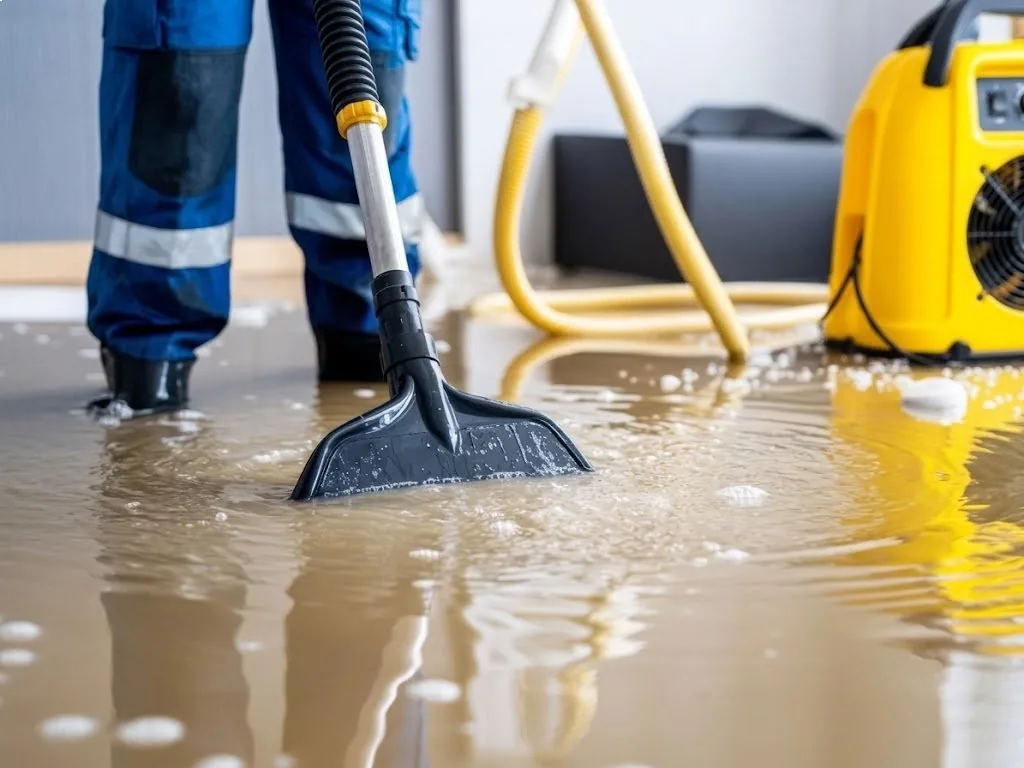
Extraction in a converted OTR building means working the whole vertical path, not one apartment. We pump and extract where the water is standing and pull it from the ceiling and floor cavities between units before it soaks the century-old joists. Coordinating access across units in the first hours is the difference between drying and rebuilding.
What the First Visit Covers
Isolating and repairing the failed line, pumping the bulk standing water, extracting what has soaked into carpet, pad, and subfloor, and lifting saturated pad and contaminated porous material that cannot be saved.
Drying equipment goes in the same visit so drying starts immediately in your Over-the-Rhine home. The drying itself is a separate stage that runs over the following days — extraction is what stops the damage getting worse.
Documented From the First Hour
Photographs of the source and the water line before we pump, plus moisture readings taken on the first visit. Whether the loss is covered remains your insurer’s decision, but the record adjusters ask for is the part we control, and it is easiest to capture before the water is gone.
When Over-the-Rhine Homes Need Emergency Extraction
In Over-the-Rhine's converted 19th-century multi-units, the extraction calls we get most often are:
- A burst supply line that ran before anyone noticed
- A water heater that failed and emptied its tank
- A basement that took on water during a storm
- A sewer or drain backup that came up through a floor drain
Happy Homeowners
Why Homeowners in Over-the-Rhine Choose Degree of Comfort
Five Paws Across the Board.
Family owned since 1993, 33 years of experience
Hear more from our customers





Standing water in Over-the-Rhine? Every hour counts
Call NowWhy the First Hours Decide What Survives
Water keeps moving into framing and subfloor for as long as it sits, and it does not stop at the edge of the puddle. Materials that could have been dried on day one often have to be replaced by day three. In Over-the-Rhine the practical difference between calling within the hour and calling the next morning is usually the difference between an extraction bill and a demolition bill.
We Stop the Source, Not Just the Puddle
Most extraction outfits cannot touch the pipe that caused the problem, which leaves hours or days between the water being pumped out and a plumber arriving to stop it coming back. A lot of damage happens in that gap. Because we are plumbers, the burst line, failed fitting, or dead water heater in your Over-the-Rhine home gets isolated and repaired as part of the same visit.
Clean Water, Grey Water, and Contamination
A supply line break is clean water. An appliance line carries detergent and food waste. Anything that backed up from a sewer or came in from outside during a storm is contaminated, which changes the protective equipment we use from the first minute on site and means more porous material has to be removed rather than dried. Tell us the source when you call.
When You Do Not Need Us
A small clean-water spill on tile or sealed vinyl, caught within the hour, is a mop and a fan. A shop vac handles more than people expect on hard flooring. If the water never left the room, never reached carpet or drywall, and is already up, you are done — calling us would be paying for equipment you do not need. The threshold is porous material: once water is in carpet pad, subfloor, or the bottom of a drywall sheet, household tools cannot reach it.
Why Over-the-Rhine Homeowners Call Us First
Every hour water sits is more material that can’t be saved, so we aim to be at your Over-the-Rhine home the same day. You approve the price first, and we take photos and moisture readings for your insurance claim.
Degree of Comfort in Over-the-Rhine


Emergency Water Extraction FAQs for Over-the-Rhine
Yes. We isolate the source and extract on each floor the water reached, and we do not need to shut water to the entire building to do it — only to the affected line. Getting access to each unit in the column is the main variable, so tell us on the phone how many floors are involved and we will bring the pumps and hose length to match.
Same day for most of the area, and we treat active flooding as an emergency rather than a booking. Call and tell us how much water there is and whether it is still coming in — that changes how we dispatch.
Shut the water off at the main if you can safely reach it. Kill power to the affected level at the panel — never stand in water to reach a breaker. Lift what you can off the floor, especially anything with fabric or paper. Do not run a household vacuum on standing water.
For a small clean-water spill on hard flooring, genuinely yes, and you should. A shop vac and a fan will finish that. What a shop vac cannot do is pull water back out of carpet pad, subfloor, or wall cavity, which is where the volume actually goes in a real flood. If water spread past one room or has been down more than a few hours, it needs extraction equipment.
The extraction itself is usually a few hours, depending on volume and access. That is only the first step — drying the structure afterward typically runs three to five days with equipment in place. Extraction is what stops the damage getting worse; drying is what makes the space usable again.
Depends on the source. A supply line break is clean water. An appliance line carries detergent and food waste. Anything that backed up from a sewer, or came in from outside during a storm, is contaminated — that changes the protective equipment we use and means more porous material has to be removed rather than dried.

Need Emergency Water Extraction in Over-the-Rhine?
Call now for fast, licensed service in Over-the-Rhine, Cincinnati, OH, or request an estimate.
Call (513) 586-5107Schedule Water Extraction in Over-the-Rhine here.
(513) 586-5107Call · Mon–Sun: 8am–8pm
Step 1 of 2