
Key Takeaways
- There are two main fixes: open-trench repair, where the pipe is dug up, and trenchless repair, which works through small access points instead.
- Trenchless is faster and easier on your yard, but it only works when the pipe is intact enough to line or burst.
- A camera inspection comes first — it finds the break, the cause, and the depth so nobody guesses at the repair.
- The right method depends on the damage, not a sales pitch. An estimate with a camera inspection gives you the real answer.
A broken sewer line is repaired one of two ways. The traditional method is open-trench repair: a crew digs down to the damaged pipe, exposes it, and replaces or patches the bad section. The newer approach is trenchless repair, which restores the line through one or two small access holes instead of a long trench. Which one fits your home comes down to how bad the damage is, where the pipe runs, and what condition the rest of the line is in. A camera inspection settles it.
Why Sewer Lines Break in the First Place
Sewer lines fail for a handful of predictable reasons. Tree roots are the most common — they find the tiniest crack or loose joint, work their way in chasing water, and eventually choke or split the pipe. Age is another: older clay and cast-iron lines corrode and go brittle. Ground movement from settling soil or unpredictable weather can shift and crack a pipe. Add years of grease and debris buildup, and a line that was fine for decades starts to slow, smell, or back up.
The warning signs tend to show up before a full failure: drains that empty slowly across the whole house, a sewage odor inside or in the yard, gurgling toilets, or a backup in the lowest fixtures. If you are not sure whether the problem is the main line or a single clog, here is how to tell if your main drain is clogged.
Traditional Open-Trench Repair
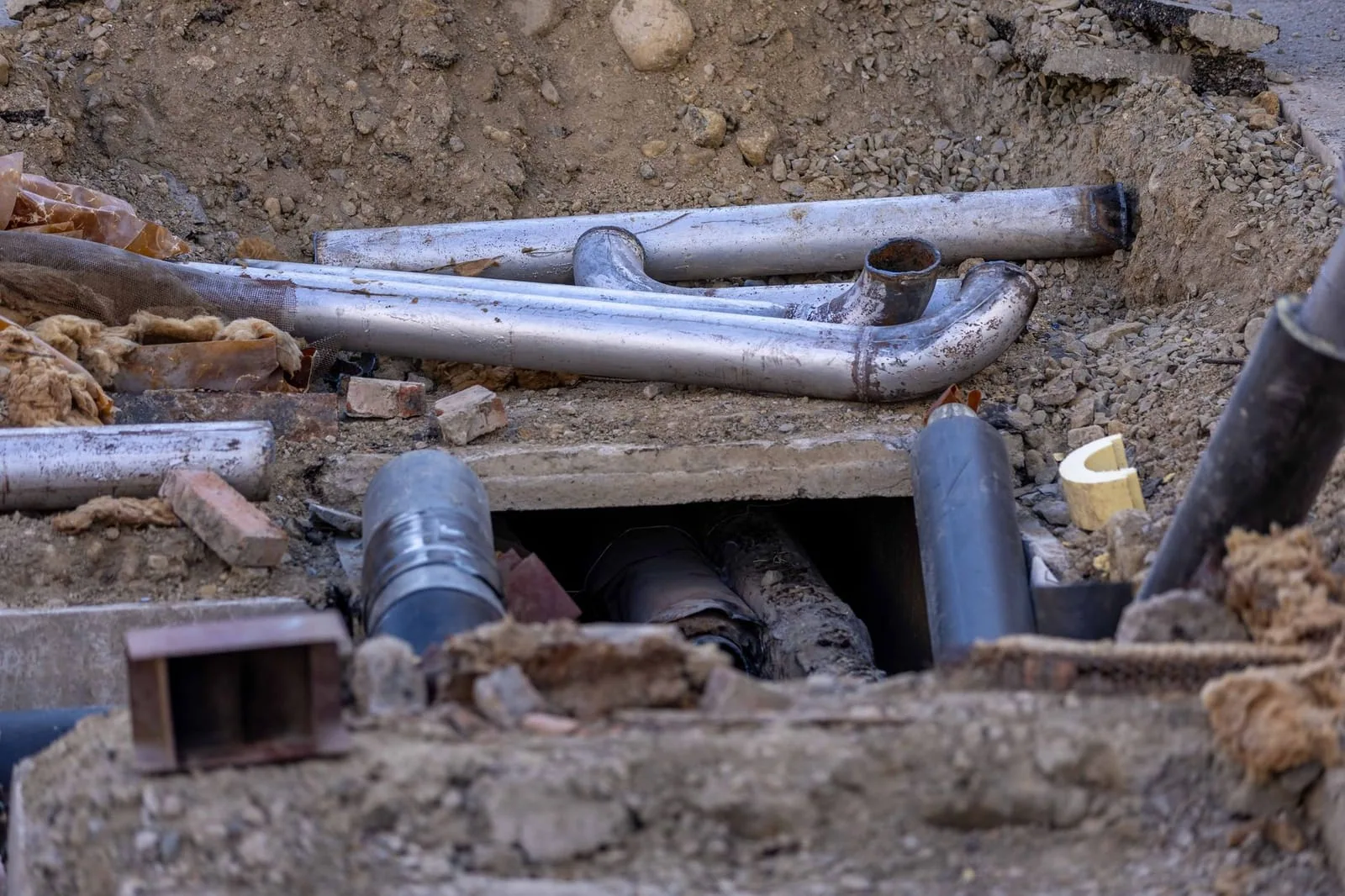
Open-trench repair is the original method, and it still has a place. A crew digs a trench along the path of the sewer line, exposes the damaged section, and either patches it or replaces the pipe outright. Because the pipe is fully uncovered, this approach handles the worst cases — a line that has collapsed, badly misaligned, or crushed beyond what a liner could restore.
What to Expect
The trade-off is the digging. Open-trench work disrupts whatever sits above the pipe: lawn, landscaping, a driveway, a patio, sometimes a section of concrete. It usually takes longer than a trenchless job and leaves you with restoration work afterward. That said, when the damage is severe or spread across a long run of pipe, a full dig can be the more thorough and sometimes the more economical fix. It also gives the plumber a clear line of sight on everything, which matters when the pipe is in rough shape.
Trenchless Sewer Repair
Trenchless repair fixes the line without opening a long trench. Instead of exposing the whole pipe, the plumber works through one or two small access points. There is far less digging, your yard stays mostly intact, and the job typically wraps up faster. Trenchless comes in two main forms.
Pipe Lining
Pipe lining, also called cured-in-place pipe, threads a flexible epoxy-coated tube into the existing line and inflates it. The epoxy hardens against the old pipe walls and forms a new, jointless pipe inside the old one. It is minimally invasive, keeps labor costs down, and creates a smooth surface roots struggle to penetrate. The catch: the host pipe has to be structurally sound enough to hold the liner. A line that has collapsed or lost large sections has nothing for the liner to bond to.
Pipe Bursting
Pipe bursting pulls a new pipe through the path of the old one while a bursting head fractures the old pipe outward and pushes the fragments into the surrounding soil. You get a brand-new pipe, not a lining, and you keep most of your landscaping. It works where lining will not, but it takes specialized equipment and an experienced crew to do it right, which is why it is not a DIY job or something every outfit offers.
Which Method Is Right for Your Home?
The honest answer is that it depends on the pipe, and no reputable plumber should quote a method before seeing it. The factors that decide it are the extent of the damage, where the line runs, how deep it sits, your budget, and how much of your yard you want to protect. A cracked but intact pipe is a strong candidate for lining. A collapsed run under a driveway might call for bursting or a targeted dig. Widespread failure across an old line sometimes points back to a full open-trench replacement.
This is also where the honesty note belongs: not every sewer problem is a broken line. Sometimes what looks like a failing pipe is a root intrusion or blockage that clears with a proper cleaning, and a working main drain cleanout makes that far easier to diagnose and service. A camera inspection tells you which situation you are actually in before anyone starts digging.
Why a Professional Inspection Comes First
Every good sewer repair starts with a camera. A plumber feeds a waterproof camera down the line to find the exact break, its cause, and its depth, then recommends the method that fits. That inspection is what keeps you from paying for a full dig you did not need — or from lining a pipe that was too far gone to hold one. It also confirms the work meets code and flags any surprises before the equipment shows up. Guessing on a sewer line is expensive; looking first is not.
Get Your Sewer Line Looked At by Degree of Comfort
Degree of Comfort diagnoses and repairs broken sewer lines across Cincinnati and the surrounding Tri-State, including Northern Kentucky and Southeast Indiana. We start with a camera inspection, tell you plainly whether trench or trenchless is the right call, and handle the sewer repair and replacement from there. We are family-owned, licensed and insured, with upfront, flat-rate pricing and a satisfaction guarantee.
If your drains are slow, your yard smells, or you have already had a backup, do not wait for a full failure. Call (513) 586-5107 or request an estimate and we will find out what is really going on down there.
Frequently Asked Questions
Let Degree of Comfort Handle It
Our licensed technicians serve Cincinnati and surrounding areas. Same-day service available.
Call (513) 586-5107